
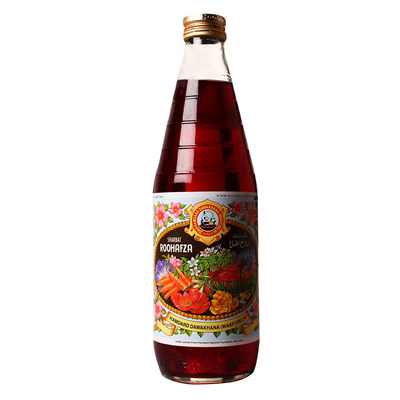
What Is Rooh Afza — The Story Behind India’s Most Iconic Summer Drink
Walk into any Indian household in May or June and there is a near-certain chance you will find a tall red bottle in the refrigerator. Rooh Afza is not just a drink — it is a sensory memory for generations of Indians, Pakistanis and Bangladeshis. The sight of that distinctive red liquid swirling into a glass of cold milk or water, the unmistakable floral fragrance, the instant coolness — Rooh Afza has occupied a unique place in South Asian culture for over 115 years.
But what exactly is in that red bottle? Where did it come from? What are its genuine benefits — and what are the honest precautions? This article covers everything you need to know about Rooh Afza, from its Unani origins and full ingredient list to practical recipes, realistic health benefits, and the important cautions that most articles do not mention clearly enough.
🔬 The History of Rooh Afza — From Old Delhi to the World
The story of Rooh Afza begins in 1906 in the narrow lanes of Lal Kuan, Old Delhi. Hakim Hafiz Abdul Majeed, a renowned Unani physician and the founder of Hamdard Laboratories, was witnessing the devastating effects of the brutal Delhi summer on ordinary people — heatstroke, dehydration, fever, exhaustion and fainting were commonplace in the days before electricity, ceiling fans and refrigerators. The Hakeem set out to create a herbal cooling concentrate using ingredients already validated in the classical Unani Materia Medica for their heat-reducing and restorative properties.
The result was Rooh Afza — a name derived from Persian, where Rooh means soul and Afza means that which nourishes or elevates. Literally: the elixir that nourishes the soul. The formulation combined thirteen traditional Unani cooling herbs with distillates of rose and kewra (fragrant screw pine), extracts from cooling fruits and vegetables, and the roots of vetiver — a grass revered in Indian tradition for its ability to reduce body heat.
Historical Timeline:
• 1906: Rooh Afza first formulated by Hakim Hafiz Abdul Majeed, Old Delhi
• 1922: Hakim Abdul Majeed passes away — family continues the legacy through Hamdard
• 1947: Partition of India divides Hamdard — Hakim Abdul Hameed leads India operations, Hakim Mohammad Said founds Hamdard Pakistan
• 1971: Bangladesh independence leads to a third Hamdard branch
• 2007: Listed among the top 10 drinks in the world by a US magazine survey
• 2023: Indian courts confirm Rooh Afza name and brand as a registered trademark of Hamdard
• Today: Produced in three countries — India, Pakistan and Bangladesh — each with slightly varying formulations
Hamdard Laboratories, which produces Rooh Afza in India, operates as a Waqf (charitable trust) institution — meaning its profits go toward educational and social welfare activities rather than private shareholders. This is a significant and often overlooked aspect of the Rooh Afza story that adds to its cultural identity across the subcontinent.
📋 Rooh Afza Ingredients — The Full Breakdown
Rooh Afza’s ingredient list is more complex than most people realise. The traditional Unani formulation contains a remarkable blend of fruits, herbs, vegetables, flowers and roots — many of which have individually documented properties in classical Unani and Ayurvedic medicine.
Herbal and Floral Ingredients
Core Herbs and Flowers:
• Gulab (Rose — Rosa damascena): The dominant flavour and fragrance of Rooh Afza. Rose is classified as a Mubarrid (cooling agent) in Unani medicine and is traditionally used for reducing body heat, calming the mind and supporting heart health. Rose distillate is one of the two primary active distillates in the formulation
• Kewda/Kewra (Fragrant Screw Pine — Pandanus odoratissimus): The second primary floral distillate. Used in Unani medicine for its cooling, aromatic and mildly nervine (nerve-calming) properties. Contributes the distinctive kewra fragrance characteristic of Rooh Afza
• Khas (Vetiver — Vetiveria zizanioides): The root of the vetiver grass, long used in Indian tradition as one of the most potent cooling agents. Khas sharbat and khas water have been used for centuries to counter heat exhaustion. In Unani medicine, vetiver is classified as having strong Mubarrid (cooling) properties
• Gaozaban (Borage — Borago officinalis): A traditional Unani cardiac tonic herb with mild cooling and mood-supporting properties. Used in classical formulations for anxiety, palpitations and heat-related fatigue
• Kasni (Chicory — Cichorium intybus): A bitter herb used in Unani medicine as a liver tonic and mild diuretic. Supports digestive function and is considered cooling in temperament
• Dhaniya (Coriander — Coriandrum sativum): Coriander seeds are a classic digestive and cooling herb across Ayurveda and Unani medicine. Reduces bloating, supports digestion and has mild diuretic properties
• Nilofer (White Water Lily — Nymphaea alba): A classic Unani cooling herb used for fever, heat-related conditions and as a cardiac tonic
• Sandal-safaid (White Sandalwood — Santalum album): Among the most revered cooling agents in both Unani and Ayurvedic traditions. Used for reducing body heat, calming the nervous system and supporting heart health
• Chhareela (Lichen — Parmelia perlata): A traditional Unani herb used for its mild digestive and cooling properties
Fruit Ingredients
The traditional Rooh Afza formulation incorporates distillates and extracts from a wide range of fruits including pineapple, apple, assorted berries, orange, watermelon, citron, strawberry, raspberry, loganberry, cherry, concord grapes and blackcurrant. These fruit components contribute to the flavour profile, provide trace natural sugars and fruit acids, and add to the overall refreshing character of the drink.
Vegetable Ingredients
Less commonly known is the fact that Rooh Afza also contains vegetable components — including carrot (Gajar), spinach and mint. Carrot contributes natural carotenoids; spinach adds trace iron and chlorophyll; mint contributes its well-documented digestive and cooling properties.
Modern Commercial Additives
⚠️ What the Modern Formulation Also Contains:
• Sugar: The largest ingredient by weight — approximately 65 to 88 percent of the formulation depending on the version. This is the most significant health consideration with Rooh Afza
• Citric Acid: A natural organic acid used as an acidulant and mild preservative — considered safe in standard amounts
• Sodium Benzoate (E211): A synthetic preservative used to extend shelf life. Subject to ongoing scientific discussion about safety at high intake levels
• FD&C Red No. 40 / Allura Red (E129): The synthetic food colouring that gives Rooh Afza its characteristic vivid red colour. Some studies have raised questions about links to hyperactivity in children, though regulatory bodies in most countries continue to permit its use
• Xanthan Gum: A food thickener used to maintain the syrup’s viscosity and prevent ingredient separation — generally considered safe
It is important to understand this distinction clearly: the herbal heritage of Rooh Afza is genuine and rooted in classical Unani medicine. However, the modern commercial product is primarily a sugar syrup with herbal distillates — not a concentrated herbal medicine. The ratio of sugar to active herbal content in the commercial product is heavily weighted toward sugar. This does not diminish its cultural value or its refreshing qualities, but it is important context for understanding its health profile honestly.
🌿 Traditional Benefits of Rooh Afza — What the Unani System Documents
Based on its ingredient composition and its documented use within the Unani system of medicine, Rooh Afza has been traditionally associated with several supportive benefits. These are the properties attributed to the formulation in traditional practice — they are not clinical medical claims and should be understood in that context.
Body Cooling and Heat Protection
This is Rooh Afza’s primary and most well-established traditional benefit. The combination of rose, kewra, vetiver (khas), sandalwood and white water lily — all classified as Mubarrid (cooling) agents in Unani medicine — gives the formulation a genuinely recognised cooling character in traditional practice. The drink was specifically formulated to counter the effects of the brutal Indian summer: heatstroke, excessive sweating, heat exhaustion and loss of vitality due to heat. When consumed as a cold drink during hot weather, Rooh Afza may help support comfort and reduce the sensation of body heat through both physiological hydration and the documented cooling properties of its herbal components.
However, it is important to be precise here: Rooh Afza does not literally lower body temperature. The cooling sensation comes from a combination of cold temperature (ice or refrigerated water), the psychological effect of the familiar fragrance and taste, the hydrating effect of fluid intake, and the mild physiological effects of its cooling herbal distillates. During a genuine heatstroke emergency, Rooh Afza is not a medical treatment — immediate medical attention is required.
Hydration Support During Summer and Fasting
Rooh Afza’s traditional mineral profile — containing trace amounts of calcium, sodium, magnesium, sulphur, phosphorus and potassium from its fruit and vegetable components — may provide mild electrolyte support alongside the fluid intake. This makes it particularly popular during Ramadan, when the body requires careful rehydration at iftar after a long fast. A glass of Rooh Afza with water or milk at iftar time provides rapid fluid replenishment along with quick energy from its sugar content — both useful immediately after fasting.
That said, the high sugar content means that Rooh Afza as a sole rehydration strategy has limitations. Plain water, coconut water or ORS (oral rehydration salts) are superior for genuine rehydration. Rooh Afza is better understood as a culturally significant iftar beverage that provides pleasant rehydration — not as a medical electrolyte replacement.
Digestive Support
Several of Rooh Afza’s herbal ingredients — particularly coriander (Dhaniya), chicory (Kasni) and mint — have well-documented digestive properties in both Unani and modern pharmacology. Coriander is a classical carminative that reduces gas and bloating; chicory supports liver function and bile production; mint relaxes the gastrointestinal smooth muscle. Together these may support Rooh Afza’s traditional reputation as a mild digestive aid, particularly useful when consumed after heavy meals. It may help reduce bloating, nausea and the discomfort of indigestion when taken in moderate diluted form.
Energy and Vitality
Rooh Afza provides rapid energy primarily through its sugar content. During periods of physical exertion, heat exhaustion or fasting-related fatigue, the quick glucose availability from Rooh Afza can provide a rapid energy boost. This is one of the reasons it has remained a staple at Indian weddings, sports events and iftar gatherings — it delivers fast energy and refreshment simultaneously. However, as with any high-sugar food, this energy comes with an equal and opposite response — a blood sugar spike followed by a drop — which is why moderation and pairing with substantive food is important.
Mild Cardiac Support — Traditional Claim
Gaozaban (Borage) and rose — both components of Rooh Afza — are classified in Unani medicine as Mufarrih-e-Qalb (cardiac gladdening herbs) that traditionally support heart comfort and reduce palpitations associated with heat and anxiety. This traditional cardiac supportive claim should be understood as a mild tonic effect within the Unani framework — it is not a treatment for cardiac conditions and should not be mistaken for one.
📋 Rooh Afza Nutritional Information
| Nutrient | Per 30 ml Serving (undiluted) | Notes |
|---|---|---|
| Calories | Approximately 90 kcal | Primarily from sugar |
| Total Sugar | 20–23 grams | High — primary concern |
| Protein | 0 grams | Negligible |
| Fat | 0 grams | Fat-free |
| Fibre | 0 grams | No dietary fibre |
| Herbal distillates | Present in trace amounts | Active Unani components |
🥗 Popular Rooh Afza Recipes — How to Make and Use It
Rooh Afza’s versatility is one of the reasons it has remained relevant for over a century. It works as a base for drinks, desserts, ice creams and even savoury accompaniments. Here are the most popular and practical ways to use it in the Indian kitchen.
1. Classic Rooh Afza Sharbat (Water)
The simplest and most traditional preparation. Add 2 tablespoons (approximately 30 ml) of Rooh Afza to a tall glass of cold water. Stir well. Add ice cubes and a squeeze of fresh lemon if desired. This is the classic summer drink of the Indian plains — quick to make and instantly refreshing. For a lighter version, reduce to 1 tablespoon per glass and use chilled water from the refrigerator rather than adding ice.
2. Rooh Afza Milk (Doodh Sharbat)
Add 2 tablespoons of Rooh Afza to a glass of cold milk and stir well. This is the most popular way to consume Rooh Afza across India — the combination of milk’s protein and fat with Rooh Afza’s sweetness and floral fragrance creates a drink that is both filling and refreshing. It is commonly served at Indian weddings and festive gatherings. For children, Rooh Afza milk is a popular alternative to commercial flavoured milk products — though the sugar content should be kept in mind.
3. Rooh Afza with Sabja Seeds (Basil Seeds)
Soak half a teaspoon of sabja seeds (basil seeds — tukmaria) in water for 15 minutes until they swell and develop a gelatinous coating. Add the soaked seeds to a glass of cold water along with 2 tablespoons of Rooh Afza. Stir, add ice, and serve. This is a particularly popular summer combination in India — the sabja seeds add texture, fibre and additional cooling properties while making the drink more filling. It is also a popular Ramadan iftar drink across Muslim communities in India.
4. Rooh Afza Lemonade
Combine 2 tablespoons of Rooh Afza with the juice of one lemon, a pinch of black salt (kala namak), 4 cups of cold water and soaked sabja seeds. Mix well and serve with ice. The lemon juice adds vitamin C and cuts through the sweetness; the black salt adds an earthy note and mild digestive benefit. This is a more complex and nutritionally rounded version of the basic sharbat.
5. Rooh Afza Falooda
Falooda is one of India’s most beloved cold dessert drinks and Rooh Afza is its classic base. Layer a tall glass with cooked falooda sev (vermicelli), soaked sabja seeds and rose syrup (Rooh Afza). Pour cold milk over the layers. Top with a scoop of vanilla or rose ice cream and garnish with crushed pistachios. While Falooda is an indulgent treat rather than an everyday drink, it represents the cultural peak of Rooh Afza’s culinary use in India.
6. Rooh Afza Kulfi
Add 3 to 4 tablespoons of Rooh Afza to full-fat milk that has been reduced to half its volume by slow boiling. Add condensed milk, mix well, pour into kulfi moulds and freeze overnight. The result is a rose-flavoured kulfi with the characteristic colour and fragrance of Rooh Afza. This is a popular homemade summer dessert across North India.
7. Rooh Afza Kheer
Prepare regular rice kheer with full-fat milk, rice and sugar. Allow to cool slightly, then stir in 2 tablespoons of Rooh Afza just before serving. The addition gives the kheer a delicate rose colour and floral note that elevates a simple dessert into something special for festive occasions.
🌙 Rooh Afza and Ramadan — A Cultural and Practical Connection
The relationship between Rooh Afza and Ramadan is one of the most significant cultural associations of any food product in South Asia. Across India, Pakistan and Bangladesh, Rooh Afza sales surge dramatically during the holy month of Ramadan — it is estimated that a significant proportion of Hamdard’s annual Rooh Afza sales occur in this single month.
The practical reasons are clear: after a long fast from before dawn to sunset, the body needs rapid rehydration and quick energy. A cold glass of Rooh Afza — whether with water, milk or as part of a sharbat — provides both immediately. The floral fragrance and familiar taste also carry deep emotional and cultural associations with iftar, family gatherings and the spirit of Ramadan across generations.
However, the Ramadan context also highlights the most important precaution around Rooh Afza for people with diabetes. Breaking a fast with a high-sugar drink when blood glucose is already unstable after prolonged fasting can cause dangerous blood sugar spikes. People with diabetes who observe Ramadan should specifically discuss their iftar beverage choices with their doctor — Rooh Afza Lite (the sugar-free variant with FOS fibre) is a more appropriate option for diabetic patients who wish to maintain the cultural tradition.
⚠️ Side Effects and Precautions — Who Should Be Careful
🚫 Who Should Limit or Avoid Regular Rooh Afza:
• People with diabetes (Type 1 or Type 2): Each serving contains 20 to 23 grams of sugar — nearly the entire daily recommended free sugar allowance. Regular consumption will significantly impact blood glucose control. Use Rooh Afza Lite (sugar-free with FOS) as an alternative, or avoid entirely and consult your doctor
• Children under 5: The high sugar content is inappropriate as a regular beverage for very young children. The artificial colouring (Red 40) has been associated in some studies with hyperactivity in children — moderation and occasional rather than daily consumption is advisable
• People managing obesity or weight: Empty calories from sugar without nutritional value contribute to weight gain. Limit to occasional consumption
• People with dental issues: High sugar content promotes tooth decay, especially if consumed regularly without rinsing the mouth
• People with fatty liver disease or elevated triglycerides: Regular sugar-sweetened beverage consumption is associated with worsening of these conditions
• Pregnant women: While Rooh Afza in moderate amounts is not contraindicated, its high sugar content and artificial additives make it advisable to limit consumption and prefer plain water, coconut water and natural fruit juices during pregnancy
⚠️ General Precautions for All Users:
• Do not exceed 2 servings (60 ml undiluted) per day
• Always dilute adequately — at least 4 to 6 parts water or milk to 1 part Rooh Afza
• Do not drink Rooh Afza as a replacement for water — it does not substitute for plain water hydration
• Store in a cool, dry place — refrigerate after opening
• Check the expiry date — do not consume expired product
• The sodium benzoate preservative may cause allergic reactions in sensitive individuals — discontinue if any skin rash, urticaria or digestive upset occurs after consumption
📋 Rooh Afza Lite — The Sugar-Free Option
Recognising the growing health consciousness among Indian consumers and the needs of diabetic patients, Hamdard introduced Rooh Afza Lite — a zero-added-sugar variant that uses maltitol (a low-calorie sweetener) and includes fructo-oligosaccharides (FOS), a prebiotic dietary fibre that supports gut health. Rooh Afza Lite retains the characteristic rose and kewra flavour and the distinctive red colour, while offering a significantly lower glycaemic impact.
For people with diabetes, weight management concerns, or those who simply prefer to reduce sugar intake without giving up the cultural experience of Rooh Afza — particularly during Ramadan and summer — Rooh Afza Lite is a sensible alternative. As with all products marketed as sugar-free, it is advisable to read the label carefully and be aware that even sugar-free beverages are best consumed in moderation.
📋 Rooh Afza vs Other Indian Summer Drinks — A Comparison
| Drink | Sugar Content | Natural Ingredients | Best For |
|---|---|---|---|
| Rooh Afza (regular) | Very high — 20–23g per serving | Herbal distillates, fruit extracts | Occasional refreshment, iftar |
| Rooh Afza Lite | Zero added sugar | Same herbal base + FOS fibre | Diabetics, weight management |
| Coconut Water | Natural — 6g per cup | 100% natural electrolytes | Best for daily hydration |
| Aam Panna | Moderate — depends on recipe | Raw mango, cumin, mint | Summer cooling, vitamin C |
| Sattu Sharbat | Low — add sugar as needed | Roasted gram flour, minerals | Energy + protein — best summer drink |
| Khas Sharbat (homemade) | Moderate | Vetiver root distillate | Traditional body cooling |
❓ Frequently Asked Questions About Rooh Afza
Q: Can I drink Rooh Afza every day in summer?
A: Occasional daily use is not harmful for healthy adults without diabetes or weight concerns — but moderation is essential. Limit to one glass (30 ml Rooh Afza in a large glass of water or milk) per day rather than multiple servings. For regular daily cooling during summer, plain water, coconut water or homemade sattu sharbat are healthier daily choices. Rooh Afza is best enjoyed as an occasional treat or as part of a special occasion rather than as your primary daily beverage.
Q: Is Rooh Afza good for children?
A: In small occasional amounts, Rooh Afza is generally safe for children above 5 years. However, it should not be given as a daily drink due to its high sugar content, which contributes to tooth decay, unhealthy sugar habits and excessive calorie intake in children. The artificial colouring Red 40 has been associated in some studies with increased hyperactivity in sensitive children. Rooh Afza mixed with milk as an occasional treat is more appropriate than as a daily beverage. For children under 5, plain milk, water and natural fruit juices are far more appropriate daily drinks.
Q: Can people with diabetes drink Rooh Afza?
A: Regular Rooh Afza is not suitable for people with diabetes due to its very high sugar content — 20 to 23 grams of sugar per standard serving. This will cause significant blood glucose spikes. Rooh Afza Lite (the sugar-free variant with FOS fibre) is a better alternative for diabetics who want to maintain the cultural experience. Even with Rooh Afza Lite, diabetics should check with their doctor, as even sugar-free beverages can have variable effects depending on individual metabolic responses and current medications.
Q: What is the difference between Indian, Pakistani and Bangladeshi Rooh Afza?
A: The three variants are produced by separate Hamdard entities in each country following the same classical un-patented recipe, but there are subtle differences in flavour, sweetness level and colour intensity that many longtime consumers notice. Pakistani Rooh Afza is commonly described as slightly sweeter and more intensely coloured; the Indian version is considered more balanced and less sweet by some; the Bangladeshi variant has its own regional character. All three are genuine Hamdard products using the same foundational Unani formula — the differences reflect variations in raw material sourcing and local taste preferences.
Q: Does Rooh Afza actually cool the body or is it just psychological?
A: The cooling effect is real but has multiple contributing mechanisms. Drinking cold liquid cools the body directly. The herbal components — particularly vetiver, rose, sandalwood and kewra — have documented cooling properties in Unani medicine, though their concentration in the diluted final drink is low. The hydration from fluid intake genuinely helps the body manage heat. And the psychological familiarity and pleasure of the taste and fragrance reduce the subjective experience of heat stress. It does not literally lower body temperature like a fever medicine — but it does produce a genuine combined physiological and psychological cooling effect.
Q: How should Rooh Afza be stored after opening?
A: After opening, Rooh Afza should be refrigerated and consumed within 4 to 6 weeks. Keep the cap tightly sealed. Do not store at room temperature after opening in hot weather, as the high sugar content and fruit/herbal distillates can ferment or degrade when exposed to repeated temperature changes. Always check the expiry date on the bottle before purchase, and discard if you notice any change in smell, colour or consistency from the usual.
Q: Is Rooh Afza halal and vegetarian?
A: Yes — Rooh Afza is halal certified and suitable for vegetarians. It contains no animal-derived ingredients. Hamdard India, the manufacturer of Rooh Afza in India, is a Waqf charitable institution and its products are formulated in accordance with both Unani principles and halal standards. The product is consumed widely across Muslim communities in India, Pakistan and Bangladesh precisely because of its halal status and its cultural association with Ramadan.
Q: What is the price of Rooh Afza in India and where can I buy it?
A: Rooh Afza is available across India through grocery stores, supermarkets, medical stores, and online platforms including Amazon, Flipkart, BigBasket and the Hamdard website. Prices vary by pack size — a 750 ml bottle typically retails between ₹175 and ₹220, while a 300 ml bottle is available at a lower price point. Rooh Afza Lite is available at a slight premium. Prices are subject to change and may vary by retailer.
🚨 When to Stop Using Rooh Afza
🚨 Stop using Rooh Afza and consult a doctor if you notice:
• Skin rash, hives or itching after consumption — possible preservative or colour sensitivity
• Digestive discomfort, bloating or diarrhoea that correlates with Rooh Afza consumption
• Unusual blood sugar spikes in diabetic patients being monitored
• Signs of allergic reaction — swelling of lips or throat, difficulty breathing — seek emergency care immediately
• Any child showing increased hyperactivity or behavioural changes associated with consumption
📌 Summary — Rooh Afza in Perspective
Rooh Afza is one of India’s most beloved and culturally significant beverages — and with good reason. Its 115-year history, its roots in genuine Unani herbal medicine, its extraordinary ingredient complexity, and its deep cultural associations with summer, family, Ramadan and celebration make it far more than just a sweet syrup. It is part of the subcontinent’s collective memory.
The Honest Bottom Line:
✅ Genuine strengths: Rich Unani herbal heritage, cooling and refreshing properties, cultural significance, versatile in recipes, halal and vegetarian, now available in a sugar-free Lite version
⚠️ Key limitations: Very high sugar content in the regular version, artificial colouring and preservatives in the modern commercial formulation, not a substitute for plain water hydration, unsuitable for daily consumption by diabetics
🎯 Best approach: Enjoy Rooh Afza as a seasonal treat and cultural beverage — in moderation, diluted adequately, and with full awareness of its sugar content. For daily summer hydration, plain water and coconut water remain the healthiest choices.
📌 Related Articles You May Find Helpful:
– Sabja Seeds (Basil Seeds) — Health Benefits and Uses
– Safi — Benefits, Uses, Side Effects and Dosage
– Jamun Fruit — Amazing Health Benefits and Uses
– Ajwain — Top Health and Medicinal Benefits
– Kalonji Oil — 25 Health Benefits and Medicinal Uses
– Ajwain Water — Recipes, Uses and Benefits



How can we make out of originality of
rooh afza sharbat
One quick question: Rooh Afza is full of sugars. Does it impact the health ?