
Medical Disclaimer: This article is for general informational and educational purposes only and is not a substitute for professional medical advice. Hair loss can result from many underlying causes — including hormonal imbalances (thyroid, PCOS), nutritional deficiencies, autoimmune conditions, genetic factors, or as a side effect of medications. The traditional remedies described here are supportive and should not replace a proper diagnosis. Consult a qualified dermatologist before starting any new treatment, especially if hair loss is sudden, patchy, or accompanied by other symptoms.
What Are Curry Leaves?
Curry leaves (Murraya koenigii) are one of the essential aromatic herbs used in Indian cooking, especially in South Indian dishes. Fresh green leaves are best for culinary use, though dried leaves are also used. Beyond the kitchen, curry leaves have a long history in traditional medicine — they are rich in Vitamin C, beta-carotene, protein, iron, zinc, and calcium, and are traditionally valued as a blood purifier that supports skin health and hair care.
In my years of researching traditional Ayurvedic texts, I have found curry leaves described as a supportive herb for scalp and hair health — used in hair oils, pastes, and dietary preparations for generations.
Curry leaves are rich in beta-carotene, protein, and antioxidants — traditional Ayurvedic texts describe them as a supportive herb for scalp and hair health.
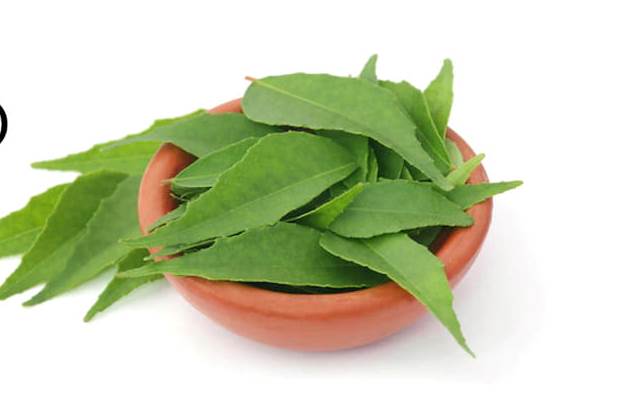
Why Curry Leaves Support Hair Health
Classical Ayurvedic sources describe hair health as a reflection of internal balance — particularly the balance of Pitta and Vata doshas. Curry leaves are traditionally used in several ways to support hair:
- Scalp circulation: Massaging curry leaf oil into the scalp is traditionally believed to stimulate blood flow to the hair follicles.
- Antioxidant support: The leaves contain antioxidants that help protect scalp tissue from oxidative stress.
- Antibacterial and antifungal properties: Traditional systems value curry leaves for maintaining a healthy scalp environment.
- Nutrient support: Beta-carotene, protein, and B vitamins in curry leaves are nutrients associated with hair strength and growth.
- Natural colour support: Eating curry leaves is traditionally believed to help delay premature greying of hair.
5 DIY Curry Leaf Recipes for Hair
These are traditional household preparations used for generations. Always do a patch test on a small area of skin before first use.
1. Curry Leaf and Coconut Oil Infusion
Ingredients: 10–12 fresh curry leaves, 2 tablespoons coconut oil.
Method: Heat the coconut oil in a small pan. Add the curry leaves and heat gently until the oil turns dark green and the leaves become crisp. Remove from heat, strain out the leaves, and allow the oil to cool completely.
How to use: Massage into the scalp and hair roots 2–3 times per week. Leave for at least 1 hour (or overnight) before washing with a mild shampoo.
2. Curry Leaf and Yogurt Hair Mask
Ingredients: 1/4 cup fresh curry leaves (ground to a paste), 1/2 cup plain yogurt.
Method: Blend the curry leaves into a fine paste, then mix with yogurt until smooth.
How to use: Apply to the scalp and hair, leave for 20–30 minutes, then rinse thoroughly. Use 1–2 times per week.
3. Curry Leaf and Aloe Vera Paste
Ingredients: 1/4 cup curry leaves, 2 tablespoons fresh aloe vera gel.
Method: Grind the curry leaves into a paste and mix with the aloe vera gel.
How to use: Apply to the scalp, leave for 20 minutes, then wash with a mild shampoo. Use once a week.
4. Curry Leaf and Amla Powder Mask
Ingredients: 2 tablespoons amla powder, 1/4 cup curry leaf paste, water (as needed).
Method: Mix the amla powder and curry leaf paste with enough water to form a smooth paste.
How to use: Apply to the scalp and hair, leave for 30 minutes, then rinse. Use once a week.
5. Curry Leaf Water Rinse
Ingredients: A handful of fresh curry leaves, 2 cups water.
Method: Boil the curry leaves in water for 10 minutes, then strain and cool.
How to use: Use as a final rinse after shampooing. Do not rinse out. Use 1–2 times per week.
How to Use Curry Leaves for Hair: Dosage and Frequency
- Hair oil: 2–3 times per week. Massage gently into the scalp and leave for at least 1 hour before washing.
- Hair masks: 1–2 times per week. Leave on for 20–30 minutes.
- Curry leaf water rinse: 1–2 times per week as a final rinse.
- Eating curry leaves: Curry leaves are a common culinary herb — using them regularly in cooking is safe for most people. If you want to take them in larger amounts as a traditional remedy, consult a qualified practitioner first.
Discontinue use if you notice scalp irritation, redness, or itching. Results from natural remedies take time — the hair growth cycle is slow, and most traditional preparations are used consistently for 3–6 months before visible changes are noticed.
What Science Says About Curry Leaves and Hair Growth
It is important to be honest about the evidence. There are no large, well-controlled human trials proving that curry leaves regrow hair or reverse genetic baldness. The evidence for their use in hair care is largely traditional and anecdotal, supported by the nutrient content of the leaves (beta-carotene, protein, B vitamins, iron, zinc, and calcium) and by laboratory studies on their antioxidant and antimicrobial properties.
What this means in practice: curry leaves are a safe, traditional, supportive herb for scalp health. They may help reduce breakage and support a healthy scalp environment. They are not a cure for hair loss caused by hormonal imbalance, nutritional deficiency, autoimmune conditions, or genetic pattern baldness. If you have significant or sudden hair loss, consult a dermatologist for proper diagnosis.
Safety and Side Effects
- Patch test first: Apply a small amount of any curry leaf preparation to the inner wrist or behind the ear and wait 24 hours before full application. I always advise my readers to do a patch test before trying any new herbal remedy — especially on the scalp.
- Citrus family allergy: Curry leaves belong to the Rutaceae (citrus) family. If you are allergic to citrus plants, avoid topical use.
- Do not replace medical treatment: If hair loss is sudden, patchy, or accompanied by other symptoms (fatigue, weight change, irregular periods), consult a doctor. Curry leaves are supportive, not a substitute for diagnosis.
- Pregnancy and breastfeeding: Culinary use is generally considered safe. For larger therapeutic doses, consult your doctor first.
Beyond Hair: Other Traditional Uses of Curry Leaves
Curry leaves have a long history of use in traditional Indian medicine beyond hair care. The following are traditional uses — they are supportive practices, not medical treatments.
Curry Leaves for Teeth and Gums
Traditional sources describe chewing 3–4 fresh curry leaves before a meal to support oral health — it is believed to strengthen teeth, support gum health, and help cleanse the mouth.
Curry Leaves for Pain Relief
A traditional paste of curry leaves, turmeric, and clarified butter (ghee) is applied externally when there is a burning sensation in the limbs. Hot fomentation with curry leaves, turmeric, and salt is traditionally used for body pain. A paste of curry leaves is also applied locally for minor skin issues such as ringworm — but persistent skin conditions should be evaluated by a doctor.
Curry Leaves for Liver Health
Classical Ayurvedic texts describe curry leaves as supportive for liver health. When taken regularly in the diet, they are traditionally believed to support the liver’s natural detoxification processes. This is a traditional belief — liver conditions require proper medical evaluation.
Curry Leaves Chutney Recipe
Ingredients: 2 cups curry leaves, 1 teaspoon dal (lentils), 2 red chillies, 1/2 teaspoon tamarind paste, a small piece of jaggery, 1 teaspoon gingelly (sesame) oil.
Method: Roast the dal, red chillies, and curry leaves in the oil. Grind everything together, then mix in the tamarind paste and jaggery with a little water to form a paste. Serve as a condiment with rice or idli.
Curry Leaves Rice
Cook raw rice until soft. Heat fresh curry leaves briefly in a pan, then mix with the cooked rice. This simple preparation is traditionally valued for its nutritional richness.
Other Traditional Home Remedies
- Curry leaves are traditionally valued as a herbal tonic that supports stomach function.
- They are used traditionally as a mild laxative.
- Some traditional sources suggest curry leaves may be supportive for people managing diabetes — but this is not a substitute for prescribed diabetes care. Consult your doctor before making dietary changes.
- The juice of curry leaves is traditionally used to help with morning sickness during pregnancy — but pregnant women should consult their doctor before using any herbal remedy.
Frequently Asked Questions
Q: Can curry leaves regrow hair?
A: There is no strong scientific evidence that curry leaves regrow hair or reverse baldness. They are a traditional supportive herb that may help maintain scalp health and reduce breakage. For hair regrowth concerns, consult a dermatologist.
Q: How often should I use curry leaf oil on my hair?
A: Traditional practice suggests massaging curry leaf oil into the scalp 2–3 times per week, leaving it on for at least an hour before washing. Discontinue if you notice irritation.
Q: Can I eat curry leaves for hair health?
A: Yes — curry leaves are a common culinary herb and are safe for most people when used in cooking. Eating them regularly is traditionally believed to support hair health and delay premature greying. For larger therapeutic amounts, consult a qualified practitioner.
Q: Is curry leaf oil safe for a sensitive scalp?
A: Do a patch test on a small area of skin first. Curry leaves belong to the citrus family, so people with citrus allergies should avoid topical use. If you have a sensitive scalp or a pre-existing scalp condition, consult a dermatologist before use.


Thanks for your response
I hate curry leaves..after reading this i started taking it regularly…Thanks for the post…