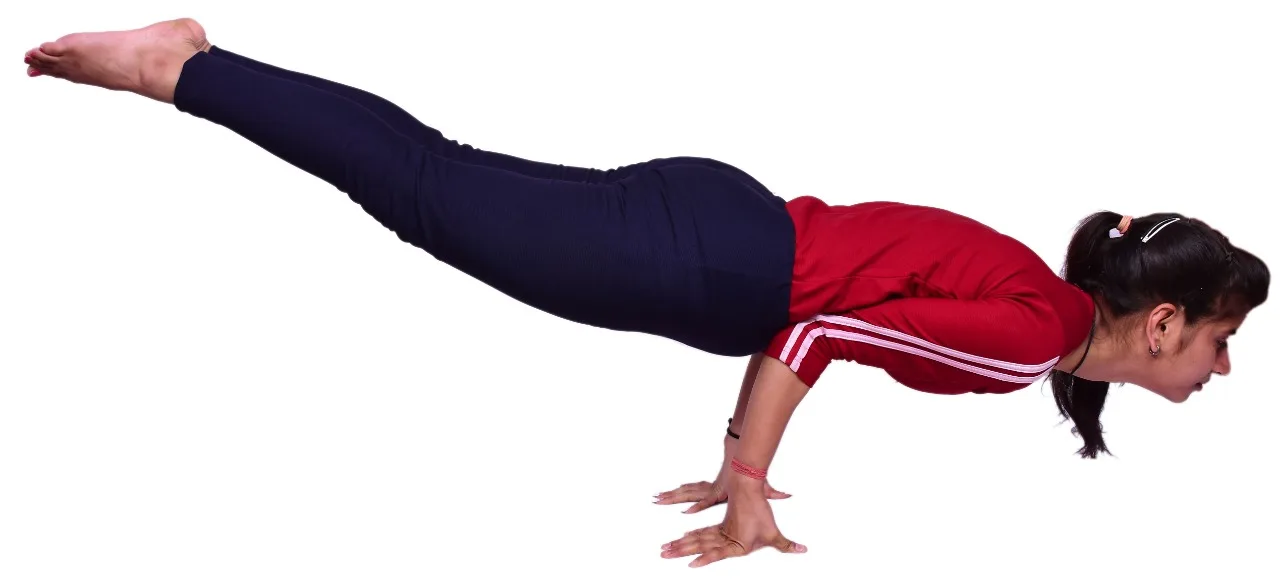
What Is the Peacock Pose?
Mayurasana (Peacock Pose) is an advanced arm-balancing yoga posture with a long history in traditional yoga practice. During my yoga graduation, one of my teachers emphasized its potential benefits for digestive health and core strengthening. However, it is important to understand that Mayurasana is an advanced pose — it requires proper preparation, modifications, and guidance before attempting the final posture. Regular practice, when done correctly and safely, may support abdominal strength and core conditioning as part of a comprehensive fitness routine. Some traditional yoga sources suggest it may be beneficial for supporting healthy digestion and blood sugar management, but these potential benefits should always be explored alongside — not instead of — medical advice and prescribed treatment.
Key Facts About Mayurasana (Peacock Pose)
- ‘Mayura’ means peacock. In the final posture, the body resembles a peacock with its feathers spread.
- This is an advanced arm-balancing yoga pose that requires significant upper body strength, core stability, and balance.
- It is traditionally believed in yoga practice to stimulate the abdominal organs and support digestive health.
- Mayurasana is typically practised toward the end of an asana sequence, not at the beginning.
- It strengthens the arms, wrists, shoulders, and core muscles while improving overall balance and coordination.
- Like all advanced yoga poses, it should be learned gradually with proper modifications and under qualified guidance.
How to Do Peacock Pose Step by Step
- Sit in Vajrasana. Open the knees and come to the kneeling position by placing the knees on the floor.
- Bend forward, stretch out the fingers of your hands and place the palms on the ground with fingers pointing towards the feet.
- Bend the elbows, keeping forearms together. Place elbows gently on either side of the navel with the chest resting on the back of the upper arms.
- Stretch both legs, keeping the legs together slowly, and come forward cautiously.
- Supporting the body’s weight on hands and wrists, raise the legs from the floor.
- Stretch the head and trunk forward.
- Maintain this position as long as comfortable. In the final part, the body remains parallel to the ground with legs stretched out and feet together.
- Come back by lowering the head; place the knees on the floor and legs on the ground.
Potential Benefits of Mayurasana (Peacock Pose)
- Core and abdominal strengthening: When practised correctly, Mayurasana engages the core muscles and may support abdominal conditioning as part of a balanced fitness routine.
- Improved circulation: The pose may help improve blood circulation to the upper body and head, which in traditional yoga practice is associated with nourishing the facial region and supporting skin health.
- Digestive support: Mayurasana is traditionally believed to massage and stimulate the abdominal organs, which may support healthy digestion and elimination.
- Blood sugar management: Some traditional yoga sources suggest that Mayurasana may support healthy pancreatic function. However, this should always be explored alongside medical treatment for diabetes — never as a substitute.
- Relief from digestive discomfort: The pose may help relieve mild indigestion, constipation, and flatulence when practised regularly as part of a comprehensive yoga routine.
- Eye health: In traditional yoga practice, Mayurasana is sometimes associated with supporting eye health through improved circulation. This is a traditional belief and should not replace professional eye care.
- Upper body strength: The pose strengthens the arms, wrists, shoulders, and hands, improving overall upper body strength and stability.
- Liver and kidney support: Traditional yoga texts suggest Mayurasana may support the function of the liver and kidneys through abdominal stimulation. This is a traditional view and not a medical claim.
- Muscular control and balance: Regular practice develops muscular power, coordination, and a sense of balance — qualities that benefit overall physical health.
Important: These benefits are based on traditional yoga knowledge and should be viewed as supportive — not curative or prescriptive. Always consult a qualified healthcare provider for any health concerns.
Contraindications — Mayurasana Should NOT Be Practised If You Have:
- Hernia (any type)
- Glaucoma or any serious eye condition
- High blood pressure (hypertension)
- Any heart disease or condition
- Peptic or duodenal ulcers
- Recent abdominal surgery
- Wrist, elbow, or shoulder injuries
- Carpal tunnel syndrome
- Pregnancy
- Heavy menstruation
Precautions
- Mayurasana is an advanced pose. Do not attempt it without first mastering simpler arm-balancing variations.
- It is easy to fall forward from the final pose and injure your face. Always place a small cushion or folded blanket under your face as a safety measure.
- Practise Mayurasana at the end of your asana sequence — never at the beginning.
- Do not attempt this pose if you feel unwell, weak, fatigued, or are recovering from any illness.
- Learn this pose under the guidance of a qualified and experienced yoga teacher. Do not attempt to learn it independently from text or video alone.
- If you experience any pain, dizziness, shortness of breath, or discomfort, release the pose immediately and rest.
- Do not practise this pose after heavy meals — allow at least 3 to 4 hours for digestion.
Breathing Guidance
- Maintain normal breathing in the starting position.
- Take a deep inhalation before raising the body into the final pose.
- Beginners may hold their breath in the final pose for as long as comfortable.
- Advanced practitioners can breathe slowly and deeply while holding the pose.
- Exhale fully after returning to the starting position.
- Rest and breathe normally before attempting a second round.
- Never strain or hold the breath beyond your comfortable capacity.
A Few More Practical Details
- Level: Advanced
- Duration: 10 to 30 seconds per round (beginner); up to 1 minute (advanced)
- Stretches: Abdomen, chest, shoulders, wrists, arms
- Strengthens: Arms, wrists, shoulders, core, spine
- Main focus areas: Core strength, arm balance, digestive stimulation
Preparatory Poses
- Plank Pose
- Dolphin Pose
- Chaturanga Dandasana (Four-Limbed Staff Pose)
- Vasisthasana (Side Plank)
- Bakasana (Crow Pose) — for arm-balancing confidence