
🔬 Understanding Cinkara — Why “One Tonic, Ten Uses” Needs Context
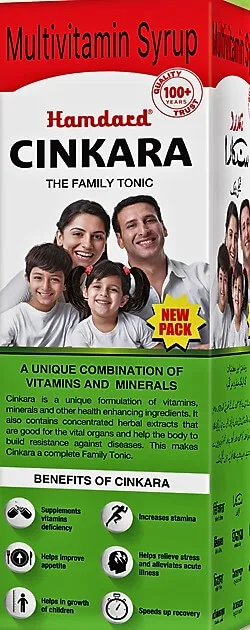
Hamdard Cinkara is manufactured by Hamdard Laboratories, one of India’s oldest Unani pharmaceutical houses, founded in 1906. It belongs to a category widely known in the Indian OTC market as a “family tonic” — a combination formulation rather than a single-nutrient supplement. Retail and pharmacy listings consistently describe it as a blend of six vitamins, nine minerals and concentrated aqueous extracts from around thirteen plant sources, delivered in a flavoured syrup base.
This is exactly why a generic “benefits of Cinkara” list rarely helps the person reading it. General weakness, low appetite, post-illness fatigue and stress-linked tiredness are clinically distinct situations, even though a single combination tonic is traditionally marketed across all of them. Because Cinkara is registered as a Unani proprietary formulation rather than an allopathic drug, it has not gone through the randomised controlled trial process required for prescription pharmaceuticals, and independently published clinical trial data on the exact finished formulation is limited. A 2022 open-label Indian clinical study of a comparably formulated multivitamin-based appetite stimulant found a statistically significant improvement in validated appetite scores within one week of use — that study was not conducted on Cinkara itself, but it shows that combination formulations of this general type can produce a measurable, plausible effect in the right situation, which is the honest evidence context for the 10 uses below.
🇮🇳 India’s Nutrition Gap — Why This Category of Tonic Has Stayed Relevant
The market for general nutritional tonics in India is not accidental — it sits on top of a genuinely significant nutrition gap. The scale documented in recent Indian survey data is striking.
• 73% of Indians are estimated to be protein deficient, with more than 90% unaware of their daily protein requirement (2017 nationwide survey)
• 67.1% of Indian children aged 6–59 months had anaemia as per NFHS-5 (2019–21) — a sharp rise from the previous survey round
• Anaemia among women of reproductive age rose from 53% in NFHS-4 to 57% in NFHS-5 nationally
• Indian adults face a more than 80% risk of dietary deficiency in calcium, vitamin A and folate, per national dietary-intake research
• Average Indian protein intake runs at roughly 0.6 g/kg body weight against an ICMR-recommended 0.83 g/kg
• Only around 4 in 10 urban Indians regularly include a high-protein food source (eggs, dal, milk, paneer, nuts, fish) in daily meals
What makes this picture significant for a product like Cinkara is the overlap of deficiencies — protein, iron, vitamin A and vitamin C shortfalls frequently coexist in the same households, particularly where diets lean heavily on cereals with limited fruit, vegetable and protein intake. This is the backdrop against which a combination tonic positioned for “weakness and low appetite” has found a durable, decades-long market in India. It is worth being precise about what this data does and does not support: it explains the demand for general nutritional tonics; it does not mean Cinkara itself corrects clinical anaemia or diagnosed protein-energy malnutrition, both of which need targeted, doctor-supervised treatment.
📋 Composition — What’s Actually Inside Cinkara Syrup
| Category | Key Components |
|---|---|
| Vitamins | Vitamin A Palmitate (~1,250 IU/dose), B1, B2, C, D3, Niacinamide |
| Minerals | Calcium Lactate, Sodium Ascorbate and other trace minerals (nine in total per manufacturer listing) |
| Herbal Extracts | Cinnamon, rose (Gulab/Rosa damascena), coriander, clove, carrot, amla, cardamom, dried orange peel, Jatamansi, Usnea longissima and others |
| Base | Flavoured syrup base with aniseed, cassia oil, sandalwood oil and sweet orange oil |
🌿 10 Uses and Benefits of Cinkara Syrup — Matched to Your Situation
1. General Weakness and Nervous Debility
The single most common traditional indication for Cinkara is general weakness or nervous debility — the kind of persistent, low-grade fatigue that isn’t tied to a specific diagnosed illness but makes everyday tasks feel effortful. Manufacturer literature positions the combined vitamin-B-complex and mineral content as replenishing nutrients that are commonly depleted by poor diet, disturbed sleep, or prolonged stress, all of which are widely documented contributors to fatigue in Indian adults juggling long work hours and irregular routines.
This is the traditional-use rationale rather than a clinically proven mechanism specific to this formulation. Where the weakness has no obvious explanation and clears up within a few weeks of better sleep, regular meals and a tonic like this, it was most likely simple nutritional or lifestyle depletion. If it persists beyond two to three weeks despite rest and adequate food, it deserves a medical check-up rather than continued tonic use, since persistent unexplained fatigue is also a recognised early symptom of anaemia and thyroid disorders — both extremely common in India, as the statistics above show.
2. Low Appetite in Children and Adults
Cinkara is widely marketed and used as an appetite support for children who eat poorly and for adults recovering from illness. This is not a niche concern in India — poor appetite frequently overlaps with the wider protein and micronutrient shortfall documented nationally, and parents commonly reach for a tonic like this as a first response to a child who “doesn’t eat properly.”
The 2022 Indian clinical study referenced above, testing a comparably formulated multivitamin-based appetite stimulant containing multivitamins, lysine and zinc, found a statistically significant improvement in validated appetite scores (CNAQ) within one week in adult patients with a confirmed loss-of-appetite diagnosis. That study was not conducted on Cinkara itself, but it demonstrates that multivitamin-mineral combinations of this general type do have a plausible, measurable effect on appetite in some clinical settings — supporting, though not proving, the traditional rationale for this specific use of Cinkara.
3. Support During Convalescence
Convalescence — the recovery period after an acute illness, fever, or surgical procedure — is one of Cinkara’s core traditional uses. The reasoning is straightforward: illness depletes the body’s vitamin and mineral reserves faster than a reduced appetite can replace them, creating a gap that a combination tonic is traditionally meant to help bridge during the days to weeks that follow.
This use case is also where Ayurvedic Rasayana thinking and Unani Muqawwi (strengthening) principles most directly overlap, since both traditions treat the post-illness period as a time requiring gentle, sustained nourishment rather than aggressive intervention. Neither tradition, however, treats a tonic as a substitute for the doctor-directed treatment of the illness itself — Cinkara’s traditional role here is supportive nutrition after the underlying illness has been properly managed.
4. Nutritional Support for Growing Children
Manufacturer information positions Cinkara as suitable “for the whole family,” with particular emphasis on children aged five years and above who may not be meeting their vitamin A, vitamin C and B-complex requirements through diet alone. This is relevant given how commonly Indian paediatric diets skew toward cereals and processed snacks with limited fruit and vegetable intake, mirroring the wider dietary-diversity gap documented nationally.
A tonic should never be used as a stand-in for addressing a genuinely poor diet, and it will not compensate for a child who consistently skips meals or fills up on processed snacks. A child not gaining expected height or weight for their age needs a paediatrician’s assessment, not an extended course of any tonic.
5. Traditional Support for Expecting and Nursing Mothers
Some retail listings and the manufacturer’s own marketing position Cinkara as suitable for pregnant and lactating women, citing its general vitamin and mineral content. It’s important to flag a genuine inconsistency here, though: manufacturer safety documentation itself notes that dedicated research on Cinkara’s safety specifically in pregnant and breastfeeding women has not been separately established.
Pregnancy and lactation are periods where nutrient needs are precisely calculated and monitored by an obstetrician through targeted prenatal supplementation, given how directly they affect both maternal and foetal health. A general tonic should only ever be added alongside this doctor-directed care, with explicit clearance from the treating obstetrician — never as a substitute for it.
6. Mental Alertness and Psychomotor Performance
Some Cinkara product literature references improved mental and psychomotor function as a traditional benefit, generally attributed to the B-complex vitamins together with herbal extracts like Jatamansi, which has a long history in Ayurvedic and Unani practice as a nervine tonic used to calm and support the nervous system.
This claim reflects traditional use and the general, well-documented role B-vitamins play in nervous system function when a person is genuinely deficient in them — it is not evidence that Cinkara enhances cognitive performance in someone who is already nutritionally sufficient. For students and professionals under exam or work pressure, adequate sleep and regular meals will generally do more for mental alertness than any tonic addressing a deficiency they may not actually have.
7. Liver and Digestive Support
Cinkara is also traditionally described as beneficial for liver function and digestive weakness, a use rooted in the Unani concept of Zof-e-Meda-o-Jigar (weakness of the stomach and liver). Ingredients like clove and cardamom carry a long traditional history as digestive supports in Unani formulations, traditionally used to reduce heaviness after meals and support appetite.
This traditional positioning should not be confused with treatment for any diagnosed liver disease. Jaundice, persistently deranged liver function tests, or any sign of genuine hepatic dysfunction require medical evaluation and treatment, not a general tonic — Cinkara’s traditional digestive-support role applies to everyday sluggish digestion in an otherwise healthy person, not to a diagnosed liver condition.
8. Increasing Stamina for Daily Activity
For otherwise healthy adults whose energy dips through a demanding daily routine, Cinkara is traditionally used as a stamina-support tonic — the logic being that adequate micronutrient status supports normal energy metabolism, and that a syrup-based delivery is more palatable and easier to sustain daily than tablets for some users.
This is the mildest and least medically significant of the ten uses, and is best thought of as complementary to — never a replacement for — adequate sleep, hydration and a balanced, protein-adequate diet, which remain the primary levers for everyday energy levels in someone without a diagnosed deficiency.
9. Reducing Stress-Linked Fatigue
Rose (Gulab) is a recurring ingredient across several Hamdard formulations, including Cinkara, and carries a long-standing Unani reputation as Muqawwi-e-Dil — a tonic traditionally associated with a calming effect and cardiac-emotional support. Combined with B-complex vitamins, this underpins Cinkara’s traditional use for stress-linked tiredness, a complaint that has become markedly more common in India’s high-pressure urban environment.
Where fatigue is clearly driven by ongoing psychological stress, addressing the stressor directly — through adequate sleep, physical activity, and in persistent cases professional counselling — will generally do more than any tonic. A calming herbal tonic can sit alongside these steps as gentle support, but it isn’t a substitute for them.
10. Speeding Up Recovery After Acute Illness
Finally, Cinkara is traditionally used in the specific window immediately after an acute illness resolves, when appetite and energy typically lag behind the resolution of the illness itself. This overlaps closely with convalescence (use case 3) but is worth calling out separately because it is the use case most consistently mentioned across manufacturer and pharmacy sources.
The traditional expectation here is restoring energy and appetite in the days to weeks after acute illness, rather than during the acute illness itself — Cinkara is not positioned, and should not be used, as a treatment during an active infection or fever, when medical treatment of the illness itself takes priority.
📋 Quick Reference: Should You Consider Cinkara or See a Doctor First?
| Your Situation | Reasonable First Step |
|---|---|
| Mild tiredness after a busy week, no other symptoms | General tonic plus rest and diet correction is reasonable |
| Recovering from a recent fever or minor illness | General tonic reasonable alongside doctor-advised recovery care |
| Pale skin, breathlessness, very low energy for weeks | See a doctor for anaemia testing before self-treating |
| Child not gaining weight or height as expected | Paediatrician visit first, not a tonic |
| Pregnant or breastfeeding | Doctor’s clearance first, given limited dedicated safety data |
🌿 Ayurveda and Unani Perspective — Supporting Context
Cinkara sits at the intersection of two traditional systems. As a Unani formulation, it reflects the Muqawwi (strengthening) category of remedies, built around Mughaziya (nutritive) ingredients believed to support Hararat-e-Ghariziya (innate bodily warmth) and digestive strength — consistent with why rose, clove and cinnamon appear together in the formula.
Amla (Indian Gooseberry): Among the most extensively studied Rasayana herbs in Ayurvedic practice. A randomised, double-blind, placebo-controlled human study found that regular amla intake improved blood fluidity and reduced oxidative-stress biomarkers over an 18-week period, lending modern support to its very long traditional reputation as a rejuvenating tonic — though that study examined amla alone rather than amla within a combination syrup like Cinkara.
Cinnamon (Dalchini): Classified in Ayurveda as Ushna Virya (heating in nature) and traditionally used in small quantities to support Agni (digestive fire) and circulation.
Jatamansi: A nervine herb used across Ayurveda and Unani practice, traditionally associated with calming the nervous system — relevant to Cinkara’s stress-linked fatigue and mental-alertness use cases described above.
Ayurvedic and Unani practitioners would generally view a tonic of this kind as complementary to — not a substitute for — correcting the root cause through diet, adequate Nidra (sleep) and a consistent daily routine, since classical Rasayana and Muqawwi therapy have always been paired with lifestyle discipline rather than treated as a standalone remedy.
🥗 Diet and Lifestyle Support Alongside Cinkara
• Protein-adequate meals: Given that roughly 73% of Indians fall short on protein intake, prioritising dal, paneer, eggs, curd and nuts alongside any tonic addresses a root cause a syrup alone cannot fix
• Iron and vitamin C together: Pairing iron-rich foods (dark leafy greens, jaggery, dates) with a vitamin C source (citrus, amla) improves iron absorption — directly relevant given how widespread anaemia is among Indian women and children
• Regular meal timing: Skipped or irregular meals are a common, under-recognised driver of “low appetite” complaints in both children and adults
• 7 to 8 hours of sleep: Chronic sleep deprivation is one of the most common contributors to the kind of persistent fatigue people often reach for a tonic to fix
• Gentle movement: A short daily walk or a few rounds of Vajrasana practised after meals is traditionally associated with supporting digestion and appetite
How to Use Hamdard Cinkara: Dosage Information
• Adults: Commonly listed as 2 tablespoons (approximately 30 ml) twice daily, taken after meals, with water
• Children (5 years and above): Commonly listed as 1 tablespoon (approximately 15 ml) twice daily, or as directed by a physician
• Shake the bottle well before each use
• Store in a cool, dry place away from direct sunlight and strong-smelling substances
• Do not exceed the recommended dose in the belief that more will work faster
Several retailers also note a traditional Unani caution: avoiding strong-smelling substances such as coffee, onion, garlic, mint, camphor and asafoetida (hing) around the time of taking the syrup, as these are traditionally believed to interfere with its aromatic and digestive action.
• Manufacturer information notes that dedicated safety research in pregnant and breastfeeding women has not been separately established — a doctor’s clearance is advisable despite retail marketing suggesting suitability for this group
• People with diabetes should discuss use with their physician, given the sweetened syrup base and cinnamon content, particularly if on insulin or other glucose-lowering medication
• Anyone with a known allergy to any listed ingredient — cinnamon, rose, clove, coriander or others — should avoid the product
• Cinkara should never substitute for a doctor-prescribed treatment for a diagnosed condition such as iron-deficiency anaemia, thyroid disease or any chronic illness
• Fatigue lasting more than 2–3 weeks despite adequate rest and nutrition
• Unexplained weight loss alongside reduced appetite
• Visible pallor, breathlessness on mild exertion, or a racing heartbeat — possible signs of significant anaemia needing proper testing
• A child not gaining expected weight or height for their age
• Fever, persistent cough, or any sign of underlying infection
• Any new symptom appearing after starting Cinkara that doesn’t resolve on stopping it
❓ Frequently Asked Questions
A: It is manufactured by Hamdard, a Unani pharmaceutical house, and is generally classified as a Unani-rooted herbal tonic, though several of its individual ingredients — amla and cinnamon among them — also hold long-standing status in Ayurvedic materia medica.
A: No. Cinkara is a general nutritional tonic, not a substitute for doctor-diagnosed and doctor-prescribed anaemia treatment, which typically requires targeted iron supplementation and investigation of the underlying cause.
A: Use only after consulting a physician. The syrup base contains sugar, and cinnamon’s blood-sugar effects have not been separately verified for this formulation, so a doctor’s guidance is the safer route rather than assuming it is automatically diabetes-friendly.
A: There’s no clinically established timeline specific to this product. A comparable multivitamin-based appetite formulation showed measurable improvement within a week in a small clinical study, but general tonics are traditionally used over several weeks alongside dietary correction — and a lack of any noticeable, sustained improvement in that time should prompt a medical check-up rather than continued indefinite use.
A: It is traditionally used for this, but it’s worth first ruling out simpler causes — irregular meal timing, excessive snacking, or screen time during meals — since these are more common drivers of poor appetite in children than any nutrient gap a tonic addresses.
• Hamdard Rooh Afza — Benefits and Unani Perspective
• Hamdard Sualin Tablet — Price, Benefits and Ingredients
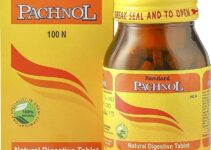
• Hamdard Pachnol Tablet — Price, Benefits and Ingredients
• Homeopathic Medicines for Obesity and Weight Loss
• Homeopathic Medicines for Hair Loss — Which Remedy Matches Your Pattern

For Diabetes Cinkara is good or bad
In such conditions, it is better to use after the consultation of the physician.