If you’ve spent any time reading about Ayurveda, you’ve probably come across Rasayana — the branch concerned with rejuvenation and longevity. Siddha medicine, the traditional system that developed in Tamil-speaking South India, has its own equivalent, and it’s one that almost nobody outside academic papers and government health portals writes about in English. It’s called Kayakarpam, and it deserves a proper explanation.
The name itself tells you something about the intent behind it. “Kaya” means body, and “Karpam” roughly translates to being as enduring as stone. Put together, it describes the goal: a body that holds up against the wear of time. Whether or not you believe traditional medicine can deliver on that, the tradition itself is old, well documented in Tamil literature, and worth understanding on its own terms — including the parts of it that genuinely call for caution.
What Kayakarpam Actually Is
Siddha medicine is one of the oldest healing systems in India, traditionally attributed to a lineage of Tamil sages known as the Siddhars, said to have recorded their findings on medicine, yoga, and astrology in Tamil texts many centuries ago. Some accounts trace the system’s origins back to the Indus Valley period, though most of what survives today comes through later Tamil literary and medical texts. Like Ayurveda, it works from a theory of bodily balance — in Siddha’s case, three forces called Vatham, Pitham, and Kapam — though the two systems developed largely independently, with their own vocabulary, diagnostic methods, and pharmacology. Siddha diagnosis traditionally relies on a framework called Envakai Thervukal, the eight methods of examination, which practitioners use to assess a patient before recommending treatment.
Kayakarpam sits within this system as the branch specifically concerned with slowing the effects of ageing and supporting long-term vitality. India’s National Health Portal describes it as combining two things: karpa avizhtham, the actual medicines, and karpa yogam, a set of yogic and lifestyle practices meant to work alongside them. The medicines themselves fall into two further categories — those freshly prepared before each use, and those manufactured in advance as finished products, similar in spirit to how a classical Ayurvedic formulation might be made fresh at home versus purchased ready-made from a pharmacy.
Classical texts also distinguish between Pothu Karpam, general preparations meant for broader use, and Sirappu Karpam, more specific and individualised regimens. The distinction matters because it reflects something Siddha medicine takes seriously: that a rejuvenation therapy suited to one person’s constitution isn’t automatically suited to another’s. Sirappu Karpam traditionally required a Siddha physician’s personal assessment before use — not unlike how Ayurvedic Rasayana therapy is meant to be tailored to an individual rather than applied the same way to everyone.
The Herbs You’ll Recognise
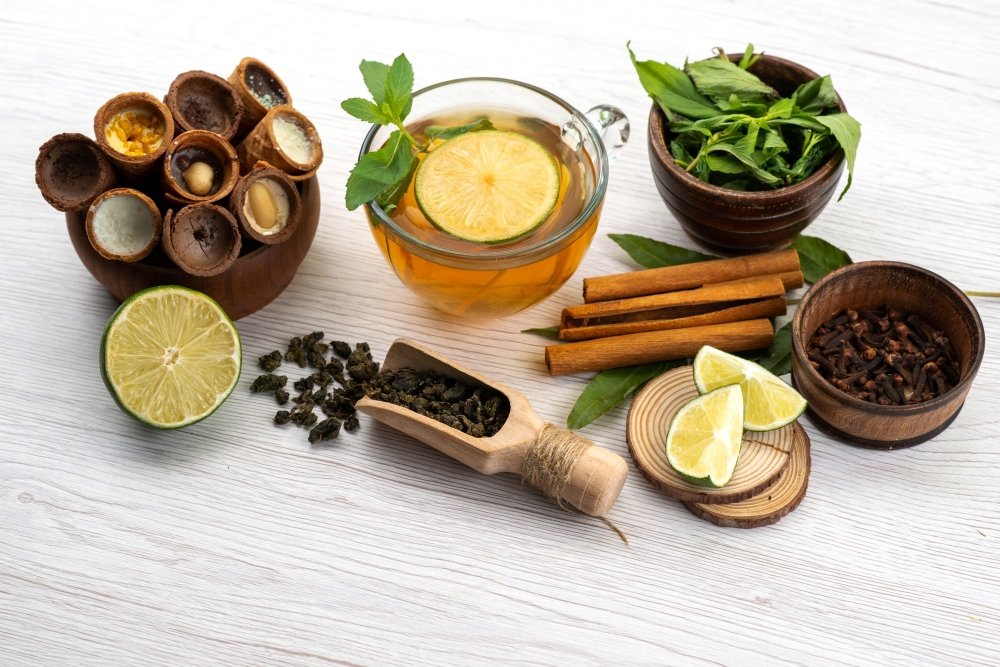
If you’ve read anything on this site about Ayurvedic herbs, some of what shows up in Kayakarpam formulations will look familiar. South Indian herbal knowledge overlaps with Ayurveda in places, even where the underlying frameworks differ, and a few plants in particular come up again and again in Siddha rejuvenation literature.
Amukkara is one of them — the Tamil name for Withania somnifera, the same plant Ayurveda calls Ashwagandha. It shows up in Kayakarpam formulations for much the same traditional reasoning it appears in Ayurvedic Rasayana: a general tonic believed to support strength and resilience over time. Nelli, or Amla (Phyllanthus emblica), is another recurring presence, valued across nearly every AYUSH system for its traditional association with vitality and its genuinely high natural vitamin C content.
Vallarai — Centella asiatica, known in English as Gotu Kola — appears specifically in the context of mental clarity and skin health, and has a long independent history in South Indian herbal medicine outside of Siddha specifically. Kadukkai, or Terminalia chebula (Haritaki in Sanskrit-derived nomenclature), is close to a universal ingredient across South Indian herbal formulations, traditionally used for digestive support as much as rejuvenation. Karisalai (Eclipta prostrata) shows up specifically in formulations aimed at hair and scalp health, and ginger — Inji — appears here the way it appears almost everywhere in traditional Indian medicine, valued for its traditional role in supporting digestion and circulation.
A 2023 review published in the Journal of Siddha looked specifically at the antioxidant and anti-inflammatory activity of several Kayakarpam formulations under laboratory conditions, and suggested this activity might relate to their traditional reputation for supporting vitality and slowing visible signs of ageing. One formulation discussed in the broader research literature, Aya Birungaraja Karpam, has been studied specifically for its traditional association with preventing premature greying and skin wrinkling — Narai and Thirai, as they’re described in classical Siddha terminology. It’s worth being honest about what this kind of research actually establishes: laboratory-level antioxidant activity in a formulation is genuinely interesting to researchers, but it isn’t the same as proof that the formulation slows ageing in a living person. Treat it as an area some scientists are curious about, not as settled medical fact.
Where This Gets Serious: Mineral and Metallic Preparations
To understand why this category exists at all, it helps to know a little about the philosophy behind it. Classical Siddha alchemical texts describe a multi-step process for genuine Kaya Kalpa treatment — starting with breath control and yogic practice to influence internal circulation, followed by dietary and lifestyle discipline, and only then, in more advanced or specific cases, the use of specially processed mineral or herbal drugs. According to scholarly accounts of the tradition, herbal preparations were considered the safest and most accessible route, precisely because the mineral route required specialised knowledge that each Siddha physician historically guarded carefully within their own lineage. That historical caution is worth taking seriously today, in a slightly different form: verify who prepared any mineral-based product before it goes anywhere near your body.
The Yoga Side of Kayakarpam
Medicine is only half of Kayakarpam. The other half — karpa yogam, sometimes referred to as Attanga Yogam — is a structured practice of posture, breath, and lifestyle discipline that Siddha tradition traces back to the Tholkappiam, one of the oldest surviving Tamil texts, and to the writings of the sage Thirumoolar, whose Thirumanthiram describes an eight-limbed yogic framework of its own. The Tholkappiam itself is said to reference eight types of yogic practice in one of its verses, which Siddha scholars point to as evidence of how far back this tradition stretches.
It’s worth noting the structural echo here with the more widely known Ashtanga Yoga tradition — both describe an eight-limbed approach to yogic practice — though Karpa Yogam comes from its own distinct Tamil lineage rather than borrowing from the Sanskrit tradition most readers will already be familiar with. India’s National Health Portal describes this side of Kayakarpam as centred on controlled breathing intended to support internal energy and circulation, alongside broader lifestyle regulation covering sleep, activity, and daily routine. This component is generally considered far lower-risk than the mineral preparations discussed above, and it overlaps naturally with the breathing and movement content already covered elsewhere on this site under Pranayama and general Yoga practice.
Diet Isn’t an Afterthought Here
Siddha medicine treats diet — Pathiyam — as inseparable from treatment, and Kayakarpam is no exception. Classical guidance leans toward fresh, seasonal, easily digestible food, and specifically warns against pairing a course of Karpa medicine with heavy, processed, or traditionally incompatible foods, on the reasoning that the wrong diet can undo what the medicine is meant to support. This isn’t a loose suggestion in Siddha practice — Pathiyam is considered specific enough that a Siddha physician will often prescribe dietary rules alongside a formulation, the same way a modern doctor might pair a prescription with instructions about food or alcohol. It’s the same underlying principle you’ll find in Ayurvedic Rasayana therapy — diet isn’t a side note, it’s part of the treatment itself.
How This Compares to Ayurvedic Rasayana
Given how often the two get mentioned in the same breath, it’s worth being precise about where Kayakarpam and Rasayana actually overlap, and where they genuinely diverge. Both are rejuvenation-focused branches of traditional Indian medicine. Both share at least a few core herbs, Ashwagandha and Amla among them. Both distinguish between general, widely-applicable formulations and more individualised ones suited to a specific person’s constitution.
Where they part ways is in their roots and their internal logic. Rasayana developed within the Sanskrit medical tradition and is described through the lens of the Tridosha system — Vata, Pitta, and Kapha. Kayakarpam developed independently within Tamil literary and medical tradition, using its own diagnostic framework and its own terminology for bodily forces. Some of the mineral and metallic preparation methods within Siddha pharmacology are also more extensively documented and more central to the tradition than their equivalents in classical Ayurvedic Rasayana, which is part of why the safety conversation around Kayakarpam specifically tends to be more pointed. Neither system is simply a variant of the other — they’re better understood as two independent traditions that arrived at broadly similar goals through different paths.
Where Kayakarpam Is Still Practiced Today
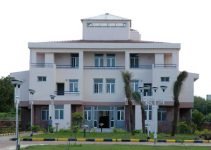
Siddha medicine remains an active, government-recognised system in India, with formal educational institutions producing registered practitioners every year. The National Institute of Siddha in Chennai is the most prominent of these, alongside a number of state government Siddha medical colleges across Tamil Nadu and, to a lesser extent, Kerala and other parts of South India. Tamil Nadu specifically runs a formal 5.5-year BSMS degree programme, and government Siddha hospitals and dispensaries continue to operate under the Department of AYUSH, offering Siddha treatment — including, in appropriate cases, Kayakarpam-related therapies — as part of India’s broader public health infrastructure. This isn’t a fringe or purely historical practice; it’s a living medical tradition with formal institutional backing, even though English-language coverage of it remains thin.
A Few Things Worth Knowing Before You Consider Any of This
Kayakarpam, especially its mineral branch, should only ever be undertaken under the ongoing supervision of a registered Siddha physician — never self-directed, and never sourced informally. If you’re pregnant or breastfeeding, it’s best avoided unless a qualified practitioner specifically clears it, since there isn’t dedicated safety research for these groups. If you have an existing condition or take prescription medication, check with both your regular doctor and a registered Siddha physician first, so nothing conflicts between the two. Be especially cautious of anything sold online as a rejuvenation formula without a named, verifiable, government-regulated manufacturer behind it — this is genuinely where most of the real risk in this space concentrates. And regardless of how enthusiastically it’s marketed, Kayakarpam isn’t a treatment for a diagnosed disease, and it shouldn’t delay or replace proper medical care for anything serious.
Questions People Usually Have
Is Kayakarpam basically the same as Ayurvedic Rasayana?
Conceptually, yes — both are rejuvenation branches of traditional Indian medicine, and they even share a few herbs, like Ashwagandha and Amla. But they’re genuinely separate systems, with different roots (Tamil versus Sanskrit), different diagnostic frameworks, and in places, different formulation methods, particularly around mineral-based preparations.
Does it actually slow ageing, scientifically speaking?
Some lab studies have found antioxidant and anti-inflammatory activity in specific formulations, which researchers think might connect to the traditional reputation for slowing visible ageing. That’s early, formulation-level research — not clinical proof that it slows ageing in people. Worth knowing about, not worth treating as settled.
Is it safe?
The herbal side is generally considered comparable in risk to other traditional herbal remedies. The mineral and metallic side is where real caution belongs — only ever through a registered Siddha physician or a government-regulated Siddha pharmacy, never an informal seller.
How do I find a registered Siddha physician?
Look for a BSMS (Bachelor of Siddha Medicine and Surgery) qualification, ideally through a recognised institution like the National Institute of Siddha in Chennai, or a state government Siddha medical college.
Is Siddha medicine recognised by the Indian government?
Yes. Siddha is one of the six systems formally recognised under India’s Ministry of AYUSH, alongside Ayurveda, Yoga, Naturopathy, Unani, and Homeopathy, with its own regulatory oversight, government hospitals, and accredited degree programmes.
Related reading: Siddha Colleges in India, Naturopathy Principles, and Ashwagandha: Benefits and Uses in Ayurveda.