
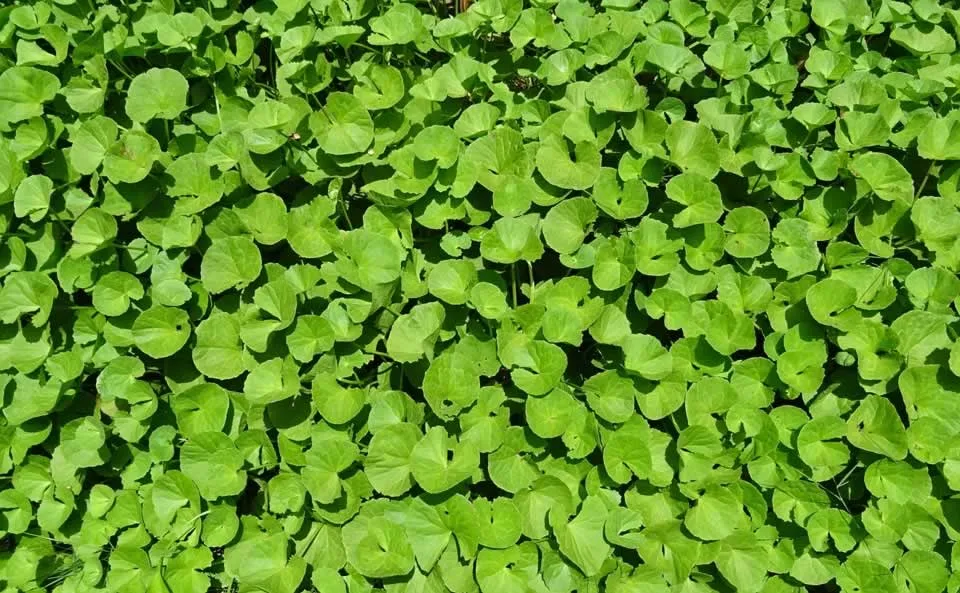
Gotu Kola: The Herb of Wisdom and Longevity
This Ayurvedic medicinal plant is used as buddhi-vardhak — the enhancer of intellect and wisdom. It is known for intellect and knowledge as the leaves strongly resemble the human brain. I have always found this resemblance fascinating — nature has a way of leaving clues about the medicinal value of plants in their very appearance.
During my years of studying and practising Ayurveda, I have seen Mandukparni — as it is called in Sanskrit — being used in many traditional preparations. The name refers to the herb’s leaves resembling a frog’s claw, and in South Asia it has been used as a kaya-kalpa — an herb believed to assure longevity and freedom from geriatric problems. This medicinal plant is widely used to formulate drugs in modern and traditional systems of medicine. In Ayurveda, it is classified as Rasayana — a rejuvenating supplement.
A note on nomenclature: In different Ayurvedic traditions, “Brahmi” refers to two different herbs — Bacopa monnieri and Centella asiatica. This article covers Centella asiatica (Gotu Kola / Mandukparni). The two herbs have overlapping traditional uses but are botanically distinct. I have seen many people confuse the two, and it is worth clarifying before you use either.
Different Names of Gotu Kola
The common names of Gotu Kola are given below:
- English: Indian pennywort, Gotu Kola, Thick-leaves pennywort, Water navelwort, Marsh Pennywort
- Hindi: Brahma-manuki, Bemgsag, Brahmi, Budhbrahmi, Mandukparni, Khulakhudi
- Sanskrit: Mandukparni
- Punjabi: Brahmi-buti
- Tamil: Vallarai
- Kannada: Ondelaga
Nutritional and Biochemical Composition
Gotu Kola is loaded with many essential biochemical substances such as heteroside, saponoside, asiaticoside, triterpene acids, a glycoside, indocentellocide, an alkaloid hydrocotylin, resin, pectic acid, vitamin C, a bitter compound, vellarin, and volatile oil. Besides these, brahmocide, brahminocide, Brahmic acid, isobaric acid, betulin acid, and stilbestrol are also found in Hydrocotyle asiatica (a related species).
What makes this herb remarkable, in my observation, is not any single compound but the combination — the saponins working alongside the triterpene acids, with vitamin C and volatile oils supporting absorption. Traditional Ayurvedic practitioners understood this mechanism long before modern analysis confirmed the biochemistry.
Traditional Medicinal Properties
Gotu Kola is known to support many systems of the body. The herb possesses bitter, acrid, sweet, cooling, and astringent properties. In traditional classification, it acts as a medhya (intellect-promoting), rasayana (rejuvenating), nervine tonic, stomachic, soporific, cardiac tonic, carminative, sedative, laxative, alterative, alexiteric, tranquiliser, decongestant, immuno-stimulant, and blood purifier. It is also traditionally described as anti-spasmodic and anti-tumor in Ayurvedic texts.
It is traditionally associated with promoting longevity, good memory, sleep, good voice, complexion, and rejuvenation. These traditional uses are recorded in classical texts — they are not clinical claims, and I always advise readers to understand them as traditional knowledge rather than guaranteed outcomes.
Benefits of Gotu Kola
1. Skin Health
In traditional practice, Brahmi powder has been used externally in skin conditions. I have seen traditional practitioners prepare simple pastes with Brahmi and cooling agents for eczema-prone skin. In Homeopathic practice, Centella asiatica is used as a supportive remedy in certain skin disorders.
Traditional texts also describe the use of this herb in supporting skin growth during recovery from various conditions. For any persistent skin condition, a dermatologist’s assessment is essential — traditional remedies work best as support alongside proper medical care.
2. Healthy Hair
This is one of my favourite traditional uses, and one I have recommended to students for years. A simple preparation: take equal proportions of Brahmi juice and coconut oil, boil gently, cool, and apply to the scalp. Massage gently for 5–10 minutes before washing. I have seen this help with scalp dryness and with reducing the appearance of premature greying when used consistently.
How to use: Massage the oil into the scalp 2–3 times a week. Leave for 30 minutes to 1 hour before washing. This can also be used for headaches caused by mental strain, and I have found it helpful after long hours of teaching or studying.
3. Haemoglobin and General Vitality
Traditional sources describe the herb as having an anabolic effect — helping support haemoglobin levels, protein status, and general vitality. In my experience, this is where the herb shows its value most clearly for people recovering from prolonged mental or physical strain.
That said, if you have anaemia or any blood-related condition, get proper medical testing and treatment. Herbal support works alongside medical care, not instead of it.
4. Nervous System Support
Gotu Kola is traditionally considered a nervine tonic. Dry Brahmi churna has been used in mental debility, stress, strain, tension, and depressive conditions. Fresh Brahmi juice processed with cow’s ghee is described in classical texts for supporting the nervous system in challenging mental states.
Over the years, I have spoken with several teachers and practitioners who regularly use Brahmi preparations during periods of intense mental work — exam preparation, teaching schedules, or writing projects. Their experience aligns with the traditional description: the herb supports steady mental energy rather than producing a stimulant “rush.”
5. Respiratory Support (Unani Tradition)
In the Unani system of medicine, Gotu Kola is used traditionally for hiccups, asthma, bronchitis, and burning sensation in the urine. It is also used traditionally to support appetite. These are traditional uses — anyone with a diagnosed respiratory condition should follow their prescribed medical treatment.
6. Brain Function and Memory
This is perhaps the best-known use of the herb. Gotu Kola is considered a brain food — not a stimulant, but a nourishing herb for the brain cells and nerves. The leaves have a marked energising effect on the brain’s cells and are traditionally described as brightening the mind.
In my own practice, I have found that students preparing for competitive exams often benefit from traditional Brahmi preparations — though I always recommend using them as part of a broader routine that includes adequate sleep, proper nutrition, and regular study breaks. No herb can substitute for those fundamentals.
7. Tiredness and Fatigue
If you struggle with fatigue and tiredness — particularly the kind that comes after mental work — Gotu Kola is traditionally considered a reputed tonic. This is a gentle, nourishing action rather than a quick energy boost.
8. Memory and Concentration in Children
In traditional practice, powdered leaves in small doses with cow’s milk are given to support mental weakness and improve memory. I have seen parents use this traditional approach for children who struggle with concentration. As always, I recommend discussing with a paediatrician first — particularly if the child is on any medication or has any diagnosed condition.
9. Speech and Nervous Coordination
Traditional texts describe the use of fresh leaves in stammering and speech-related conditions. The aqueous extract has been described as helping to reduce excessive motor activity and support nervous system coordination.
For any speech or coordination concern, a proper evaluation by a speech therapist or neurologist is important. Traditional support can be a supplement, not a substitute.
10. Headache and Sleeplessness
Brahmi is traditionally used to support restful sleep — Brahmi churna (in traditional amounts, as advised by a practitioner) with cow’s milk is the classical preparation. For headaches, particularly those related to mental strain, the massage oil described above has been helpful for many people I have spoken with.
If you experience persistent headaches or chronic sleep problems, please see a doctor. These can be signs of underlying conditions that need proper evaluation.
Precautions and Safe Use
Every herb has its appropriate use, and Gotu Kola is no exception. Based on traditional guidelines and my own experience:
- Do not use excessively: Excess or frequent use may cause body aches and giddiness. Traditional advice recommends roasting or boiling the leaves rather than using them raw as medicine.
- Avoid during pregnancy and breastfeeding unless cleared by your doctor. Traditional texts do not recommend this herb during these periods without supervision.
- Do not combine with sedatives or psychiatric medication without medical guidance.
- If you have liver disease or a history of liver issues, consult a doctor before use.
- Do not use as a replacement for prescribed medication for any chronic condition.
- Start with small amounts if you are trying a traditional preparation, and observe how your body responds.
Possible Side Effects of Gotu Kola
While Gotu Kola is generally well tolerated in traditional use, some people may experience side effects, particularly with excessive or prolonged use:
- Skin allergy or sensitivity reactions
- Burning sensation
- Headache
- Nausea
- Stomach upset
- Drowsiness
If any of these symptoms appear, stop use immediately and consult a doctor.
Additional Precautions
- Low blood pressure: If you have low blood pressure, consult your doctor before using Gotu Kola. The herb may further lower blood pressure in some individuals.
- Surgery: Stop using Gotu Kola at least 2 weeks before any scheduled surgery, as it may affect blood pressure and blood clotting during the procedure.
When to See a Doctor
Please consult a qualified physician or registered Ayurvedic practitioner if:
- You have cancer, epilepsy, leprosy, tuberculosis, or any other serious medical condition — do not self-treat with this or any herb
- You are pregnant, breastfeeding, or trying to conceive
- You are on medication for any chronic condition
- You experience unexplained fatigue, memory loss, or neurological symptoms
- You have persistent skin, hair, or scalp problems
- You experience body aches, giddiness, or any unusual symptom after using the herb
Seek immediate medical attention if you experience: severe headache, confusion, loss of consciousness, difficulty breathing, or any acute symptom after using a herbal preparation.
Frequently Asked Questions About Gotu Kola
Q: Is Gotu Kola the same as Brahmi?
A: It depends on the tradition. In some Ayurvedic traditions, “Brahmi” refers to Bacopa monnieri. In others, it refers to Centella asiatica (Gotu Kola / Mandukparni). Always confirm which herb you are buying — check the botanical name on the label.
Q: Can I use Gotu Kola for hair growth?
A: Brahmi oil (Brahmi juice + coconut oil) is a traditional hair preparation. It is used for scalp massage and traditionally believed to support hair health. It is a supportive measure, not a treatment for hair loss caused by medical conditions. If you have significant hair loss, see a dermatologist.
Q: Can Gotu Kola cure cancer?
A: No. Some laboratory studies have examined the immunomodulatory properties of the herb, but there is no clinical evidence that it treats cancer. Anyone with cancer must follow their oncologist’s treatment plan. Do not use this or any herb as a substitute for cancer treatment.
Q: Is Gotu Kola safe to take daily?
A: Traditional use suggests small amounts taken over a limited period. Long-term daily use should be supervised by a qualified Ayurvedic practitioner. Do not self-prescribe.
Q: Can I give Gotu Kola to my child?
A: Traditional texts describe its use in children for memory and concentration support. However, doses must be appropriate for age and weight, and you should consult a paediatrician or qualified Ayurvedic practitioner first.
Q: What are the side effects of Gotu Kola?
A: Traditional cautions include body aches and giddiness with excessive use. Some people may also experience skin allergy, burning sensation, headache, nausea, stomach upset, or drowsiness. Stop use if any unusual symptom appears.
Q: How do I identify authentic Gotu Kola?
A: Look for the botanical name on the label — Centella asiatica (or Hydrocotyle asiatica in older references). Buy from a reputable supplier. Brahmi and Gotu Kola are often sold interchangeably, so confirm before purchase.



Gotukola is good for complexion too.