
⚠️ Medical Disclaimer: The information in this article is for educational purposes only and is based on traditional Ayurvedic and Unani practices. It is not intended as medical advice and should not replace consultation with a qualified healthcare professional. Always consult your doctor before using Kalonji oil for any health condition, especially if you are pregnant, nursing, diabetic, or on medication.
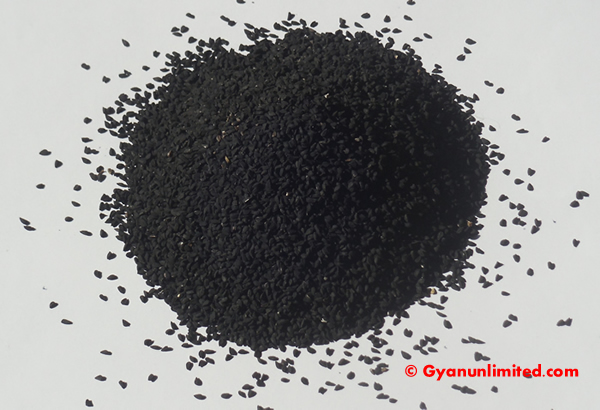
Kalonji oil, also known as black seed oil or Nigella Sativa oil, has been used for centuries in Ayurveda, Unani and traditional Islamic medicine. It is derived from the black seeds of the Nigella Sativa plant and is known for its wide range of traditional uses. Below is a comprehensive overview of its traditional benefits, medicinal uses, and important precautions.
25 Traditional Health Benefits of Kalonji Oil
- Supports hair health: Massage your head with lime juice and leave it for 20 minutes. Wash it with herbal shampoo. When hair gets dry, apply Kalonji oil. Continue for 15 days to support hair health and reduce hair fall. A paste of Kalonji oil (10 gms), olive oil (30 gms), and Mehendi powder (30 gms) — prepared after gentle heating and cooled — may be applied to the scalp once a week.
- Traditionally used in diabetes management: Kalonji oil has traditionally been used to support blood sugar management. A mixture of black tea (1 cup) and Kalonji oil (½ tsp) may be taken in the morning and before bed. Note: Diabetic patients must consult their doctor before using Kalonji oil as it may affect blood sugar levels.
- Skin care — pimples and blemishes: Mix sweet lime juice (1 cup) and Kalonji oil (½ tsp). Apply the mixture on the face in the morning and at night. It is traditionally used for skin care, helping to reduce pimples, acne and blemishes. Vinegar (1 cup) mixed with Kalonji oil (½ tsp) may also help with skin spots when applied regularly.
- Supports memory and concentration: Kalonji oil has traditionally been used to support cognitive function. Mint leaves (10 grams) boiled with water and ½ tsp of Kalonji oil — taken twice daily for 20–25 days — is a traditional Unani remedy for supporting brain health.
- May help relieve headache: Applying Kalonji oil on the forehead and near the ears is a traditional practice for headache relief. ½ tsp of Kalonji oil may also be taken twice a day. Kalonji oil is also traditionally used to help manage migraine discomfort.
- Traditionally used for respiratory support: For respiratory discomfort, a traditional Unani remedy is to take a mix of warm water (1 cup), honey (1 tsp), and Kalonji oil (½ tsp) in the morning and evening. This mixture is also traditionally used for cough and allergy support. Note: This is not a substitute for prescribed asthma medication. Consult your doctor.
- Heart health support: A mixture of goat milk (1 cup) and Kalonji oil (½ tsp) is a traditional remedy used to support heart health. This should be continued for a week as part of an overall healthy lifestyle. This is not a substitute for medical treatment of heart conditions.
- May help relieve joint discomfort: A mixture of Kalonji oil (½ tsp), vinegar (1 cup), and honey (2 tsp) applied over joints twice a day is a traditional practice for joint pain relief. A mix of dry fig (2 nos.), Kalonji oil (½ tsp), and milk (1 cup) taken once a day is traditionally used for joint, neck and back discomfort.
- Eye health support: Kalonji oil is used in traditional medicine for eye care. A mix of Kalonji oil (½ tsp) and carrot juice taken twice a day is a traditional remedy for eye health. Always consult an eye specialist for any eye condition.
- Antioxidant properties: Kalonji oil contains thymoquinone, a compound that has been studied for its antioxidant properties. Research into its potential health benefits is ongoing. Kalonji oil is not a treatment for cancer. Always consult your oncologist for any cancer-related concerns.
- Traditionally used to support healthy blood pressure: Kalonji oil (½ tsp) mixed with hot tea and taken twice a day is a traditional Unani practice for blood pressure support. Low blood pressure patients should consult their doctor before use as Kalonji may further lower blood pressure.
- Kidney health support: Kalonji oil is traditionally used to support kidney health. A mix of Kalonji oil (½ tsp), warm water (1 cup), and honey (2 tsp) taken twice a day is a traditional practice. For kidney discomfort, a mix of Kalonji (250 grams) and honey (1 cup) — 2 tsp taken with half a cup of water — is a traditional Unani remedy.
- Dental health support: Kalonji oil has traditionally been used for oral health. A mix of Kalonji oil (½ tsp) and curd (1 cup) taken twice daily is used to support gum health. Rinsing with a mix of Kalonji oil (½ tsp) and vinegar (1 tsp) thrice a day for one week may help with tooth pain and gum swelling. Soaked cotton with Kalonji oil kept near the affected tooth before bed is a traditional remedy for toothache.
- May help relieve cough and cold discomfort: A mix of Kalonji oil (½ tsp), warm water (1 cup), and honey (2 tsp) taken twice a day is a traditional remedy for cough, cold and sinus discomfort.
- Weight management support: A mix of Kalonji oil (½ tsp) and honey (2 tsp) with lukewarm water taken up to three times a day is a traditional practice used alongside a balanced diet and active lifestyle for weight management.
- Skin glow and beauty: A mix of olive oil (50 grams) and Kalonji oil (50 grams) — ½ tsp taken before breakfast for one week — is traditionally used to support skin radiance and health.
- May help with acidity and gas: A mix of ginger juice (1 tsp) and Kalonji oil (½ tsp) with a pinch of salt and water is a traditional Unani remedy for acidity and gas relief.
- Traditionally used for piles discomfort: Kalonji oil mixed with vinegar (1 tsp) applied on the affected area thrice a day is a traditional practice. A paste of Mehendi leaves (50 grams), olive oil (250 grams), and Kalonji oil (½ tsp) boiled and cooled may also be applied. For constipation relief, Kalonji oil (½ tsp) with a cup of black tea decoction twice daily is a traditional practice.
- Supports urinary health: A traditional Unani remedy for urinary discomfort is a mixture of milk (½ litre), Kalonji oil (½ tsp), and honey (1 tsp) taken twice a day for one week.
- May help with stomach discomfort: For stomach pain, a mix of Kalonji oil (½ tsp), a small amount of black salt, and warm water (½ glass) taken two to three times is a traditional practice. A mix of Kalonji oil (½ tsp) and a cup of milk taken twice a day for one week is also used for chest and stomach discomfort.
- Ear health support: Kalonji oil is used in traditional medicine for ear care. A few drops of gently warmed Kalonji oil in the ear is a traditional remedy for earache and ear discomfort. Consult an ENT specialist for persistent ear problems.
- Cracked skin care: A mix of sweet lime juice (1 glass) and Kalonji oil (½ tsp) applied twice daily in the morning and before bed is a traditional remedy for cracked hands and feet.
- May help relieve nausea: Boiling coriander (1 tsp) and Kalonji oil (½ tsp) together, cooled and taken with mint leaves thrice a day, is a traditional Unani remedy for nausea and vomiting.
- Used traditionally for swelling: Kalonji oil applied to swollen body parts is a traditional practice used to help reduce swelling and discomfort. ½ tsp taken once a day internally is also part of this traditional practice. Consult your doctor for any unexplained swelling or growths.
- Supports energy and vitality: A mix of orange juice (1 glass) and Kalonji oil (½ tsp) is a traditional Unani remedy used to help relieve tiredness and support overall vitality and energy.
Also read: Wonder benefits of Kalonji | Benefits of Kalonji to boost immunity
Black Seed Oil Side Effects and Precautions
While Kalonji oil is generally considered safe when used in small traditional quantities, certain precautions should be kept in mind:
- It may cause allergic reactions in some individuals. Do a patch test before topical use.
- It may cause stomach upset, nausea, or constipation in some people when taken internally.
- Kalonji may increase the risk of seizures in susceptible individuals.
- It may slow down uterine contractions — avoid during pregnancy.
- It may slow down blood clotting — avoid if you have a bleeding disorder.
- It may lower blood sugar levels — diabetic patients must consult their doctor before use.
- It may lower blood pressure — low blood pressure patients should consult their doctor before use.
- Avoid use for at least two weeks before any scheduled surgery as it affects blood clotting and blood sugar.
- Always consult your doctor before giving Kalonji oil to children or elderly individuals.
7 Medicinal Uses of Black Seed Oil (Kalonji Oil) in Unani Tradition
- Supports digestion: A mix of ginger juice (1 tbsp) and Kalonji oil (½ tbsp) taken twice daily is a traditional Unani practice for supporting digestion and relieving gastric discomfort.
- Traditionally used for leucorrhoea: Water (2 glasses) boiled with mint leaves for 10 minutes, with Kalonji oil (½ tbsp) added, taken in the morning before breakfast and at night before bed for 40 days — is a traditional Unani remedy. Consult a gynaecologist for persistent symptoms.
- Menstrual support: A mix of Kalonji oil (½ tbsp), water (1 cup), and honey (2 tbsp) taken in the morning and at night is a traditional practice used to support menstrual regularity. Consult your gynaecologist for menstrual concerns.
- Seasonal allergy support: A mix of warm water (1 cup), honey (1 tbsp), and Kalonji oil (½ tbsp) taken before breakfast and before bed for 30 days is a traditional Unani practice for seasonal allergy relief.
- Traditionally used in recovery support: A mix of warm water (1 cup), honey (1 tbsp), and Kalonji oil (½ tbsp) twice a day is used in traditional Unani practice as a general recovery and strengthening remedy. This is not a medical treatment — consult your doctor for any serious health condition.
- General weakness support: Kalonji oil (½ tbsp) and honey (1 tbsp) taken once a day is a traditional remedy for general weakness. Orange juice with Kalonji oil is also used to support the body’s vitality.
- Viral fever support: A mix of warm water (1 glass), dates (1 tbsp), and Kalonji oil (1 tbsp) taken for 30 days is a traditional Unani practice used alongside rest and hydration for recovery from viral infections. Always consult your doctor for fever management.
Black Seed Oil for Skin and Hair
Black seed oil is widely used in traditional wellness practices for skin and hair care. A paste of black seed oil and olive oil applied to the scalp is traditionally used to support hair health and reduce hair fall by nourishing hair follicles.
For skin, black seed oil is used in traditional practice for conditions such as acne, dry skin, and skin softening. Many traditional formulations use it as a base ingredient due to its nourishing properties. Some commercial moisturisers also include black seed oil for its skin-softening benefits.
For any persistent skin condition, consult a dermatologist before using black seed oil as a remedy.
Can it also cure some growth? I hv on on my arm
A friend of mine has been diagnosed HIV positive and has been recommended to start taking RV TABLETS. H has access to Kalongi Black Seed Oil. (HEMANI Brand). What other combination can he use to cure this condition. Please help.
Hey also check out Prunella vulgaris aka ‘heal all’
thank you so mach Brar sahib very good desi dowai ji dhanwad
is this black seed and Til in (hindi) same seed
No, they are different seeds.
Where can I get Kalongy Seeds in bulk including its oil… Indeed I am so interested to try some of the remedies mixed with this herb and its oil.
In India every retail spice shop.or in herbal /kirana store.What’s ur location.
Western countries go to any Indian grocery store
you can find in any Indian grocery store in spice section
Try your local Indian grocery store. There is always a beauty section. Ask the employees for help to find products.
can kalongi oil capsule used in summer
Kalonji oil for Acidity and hyperacidity: Acidity and gas formation can be prevented when the mix of ginger juice (1 tsp), Kalonji oil (½ tsp) is taken along with salt and water.
How much salt and water
when should i wash after applying the lime juice with kalonji oil on face……plzzzzz reply me soon
I have taken KOLONJI for falling of hair, getting good results by the grace of Almighty Allah
bilal sahab, how are you using the klonji oil for prevention of hair fall.
Unique herbs.which is safe.and beneficial in lot of diseases. But I think in joints pain kalonji and add more herbs and ayurvedic oil are more effective in joints pain.
i’ve been using Kalonji oil for two years Mush Allah it’s working very good!
in sha allah i will start to be use ….
I’m in Elliot in Eastern cape it’s possible to get Kalonji oil?i’m Epileptic & my eye tube is not working can I use it
Kalonji oil for Acidity and hyperacidity: Acidity and gas formation can be prevented when the mix of ginger juice (1 tsp), Kalonji oil (½ tsp) is taken along with salt and water.
How much salt and water…………..and how to take this and at what time….before taking meals or after and how many tines in a day. Please specify.
In quran it is mentioned that it is a medicine for 90 diseases.
I have been using the amazing black seed oil for my cellulitis and it has had an amazing result. The inflammation is gone so has the redness the horrible scaly skin is softer and nicer on the eyes and ime sure the scaring is starting to look like it’s going away. By the grace of God this substance is the answer too many prayers. Please try it for $7 Australian you can’t go wrong. Happy Days of love and light everyone .Selesste.
Hi good day….is it this oil can cure hiv
Quite interesting research oriented write up !
Assalamu alaykum! I’m from the philippines, how can we purchase kalonji oil?
It’s a great way of treatment.
For everything, Qki kalonji bht shifa deti hai.
Sounds interesting. I am also starting to take kalonji oil
How can I get the kalonji herbal medicine. I stay in Nairobi Kenya.
My hubby is suffering from cellulites please do advice how he can use the seed
This magical seeds are very useful in constipation and other diseases. After using this seeds I cured constipation and hair loss.
Thanks Allah.
Hi. I am in South Africa where can i get Kalonjioil? Please help.
Go to any spice centre
In Nairobi you can get kalonji oil from downtown hindi shops.
I’m having dark sports all over my face and body. please help
I had a 1 cm dark spot on my chin under my lower lip. I am using Kalonji Oil for one week first thing in the morning with plain hot Green Tea and last thing at night. The mark has already lightened.
Hi.i hv fibroids in uterus.how can i use black seed to get rid of these fibroids.pleasevreply me by mail
I have duodenal mass can it help cure it and if so how much do it take.
I have asthma and environmental allergies. A friend told me to use calonji seeds, purchased from an Indian Grocery store. He suggested inhaling one seed in each nostril. Do you know anything about using the seed in this way?
For Asthma the best way to use is…
Half cup boiled and hot water mix it with 1 tea spoon kalonji oil and 2 tea spoon of pure honey, drink in early morning and at bed time.
My wife before marriage was suffering from it,, with one month course alhamdo lillah she is 100% cure masha Allah. Now it’s been 8 years she doesn’t have asthma.. Alhamdo lillah
Good day
I just want to find out how much water must be used to boil the mint leaves in?
what is mint leaves
Hi,
Mint leaves is the most healthiest, sacred and wonderful medicinal ayurvedic herb. The aromatic leaf is full of nutrients and medicinal values. It is used to make variety of recipes. As far as ayurveda treatments are concerned, the holy leaf is used in about 300 treatment cases. It shows its medical importance.
Iam in Nairobi Kenya where will I get this kalonji oil please my mother has BP and anthrities
Hi,
You may purchase it through Amazon.
Hi, my mother is 80years old & has got Gallstones and the doctors can’t operate on her because of the age. We’ve been using all sorts of medication including Kalonji oil and seeds.
Hi my son is suffering from depression and taking anti pressant and xytomil for sleeping.Thus is brother in me a lot.My aunt advised me to buy a kalonji oil will it help.
Thanks
Hello,
Am in rwanda. how can I have access to nigella sativa and mehend powder,…I want to use them in preventing my hair loss.
and what is the cost.
regads, Ernest
You can order from amazon.
You may also try rosemary for hair growth
Will this oil help WITH MS
SYMPTOMS?
IF SO….HOW SHOULD I USE IT?
Of course!
In the #1 recommendation, it says Kalonji oil, Olive oil and Mehandi. It is Mehandi? or Mehti (Fenugreek).
It is Fenugreek.
Methi = fenugreek & Mehandi = henna
I’m starting to use kalongy , seeds & oil & hopefully get good results
, jaswant from Vancouver BC Canada
sure
Paralysis: The mix of warm water (1 cup), honey (1 tbsp), and kalonji oil (½ tbsp), when used twice a day, helps to recover paralysis.
Is this to drink or apply over the body?
Paralysis recommendation:
Is this to drink or apply over the body?
You can apply the oil. However, it can be taken also after the consultation of a physician.