
⚠️ Medical Disclaimer: This article is for educational purposes only. Thyroid disorders require proper medical diagnosis, regular blood tests, and ongoing management by a qualified endocrinologist or physician. The yoga practices described here are complementary and supportive — they do not replace prescribed thyroid medication or medical treatment. Never stop or reduce your thyroid medication without your doctor’s explicit guidance. See our Medical Disclaimer for full details.
📌 Quick Summary
Thyroid disorders affect millions of Indians. Yoga — when practised consistently alongside medical treatment — may support thyroid health through stress reduction, improved circulation to the thyroid gland, and better metabolic regulation. This guide covers 12 yoga poses, pranayama techniques, diet guidance, and lifestyle changes for both hypothyroidism and hyperthyroidism. Always consult your doctor before starting.
🔬 What Is the Thyroid Gland? — Clinical Overview
The thyroid is a small, butterfly-shaped gland located at the base of the neck, just below the Adam’s apple. Despite its small size — weighing only 20 to 30 grams in adults — it plays a central role in regulating nearly every metabolic process in the body. The thyroid produces two primary hormones — thyroxine (T4) and triiodothyronine (T3) — which control how the body uses energy, regulates body temperature, influences heart rate, and affects the function of virtually every organ system.
Thyroid hormone production is regulated by a feedback loop involving the hypothalamus and pituitary gland. The pituitary releases thyroid-stimulating hormone (TSH) which signals the thyroid to produce T3 and T4. When thyroid hormone levels are adequate, TSH production decreases. When levels are low, TSH increases. TSH is the primary blood test used to evaluate thyroid function — a high TSH indicates hypothyroidism (underactive thyroid) and a low TSH indicates hyperthyroidism (overactive thyroid).
🇮🇳 Thyroid Disorders in India — How Common Are They?
Thyroid disorders are among the most prevalent endocrine conditions in India. According to the Indian Thyroid Society, approximately 42 million Indians suffer from thyroid diseases — making it one of the most common hormonal conditions in the country. Hypothyroidism is significantly more common than hyperthyroidism, affecting an estimated 1 in 10 Indian adults.
Women are 5 to 10 times more likely than men to develop thyroid disorders. The risk increases significantly with age, during pregnancy, after childbirth, and at menopause. Iodine deficiency — historically common in certain parts of India, particularly in the Himalayan belt and inland areas — remains a contributing factor, though universal salt iodisation has improved this substantially. Autoimmune thyroid disease — particularly Hashimoto’s thyroiditis — is increasingly recognised as the most common cause of hypothyroidism in urban India.
📋 Types of Thyroid Disorders
🟢 Hypothyroidism — Underactive Thyroid
The thyroid produces insufficient thyroid hormones. The most common cause in India is Hashimoto’s thyroiditis — an autoimmune condition where the immune system attacks the thyroid gland. Other causes include iodine deficiency, previous thyroid surgery or radioiodine treatment, and certain medications. Hypothyroidism is managed with daily levothyroxine (T4) replacement therapy.
🔴 Hyperthyroidism — Overactive Thyroid
The thyroid produces excessive thyroid hormones. The most common cause is Graves’ disease — an autoimmune condition. Other causes include toxic nodular goitre and thyroiditis. Hyperthyroidism is managed with antithyroid medications, radioiodine therapy, or surgery depending on the cause and severity.
🟡 Subclinical Thyroid Disease
Subclinical hypothyroidism — elevated TSH with normal T3 and T4 — is particularly common in India and often goes undiagnosed. Many people with subclinical hypothyroidism experience symptoms despite normal hormone levels. Subclinical hyperthyroidism — suppressed TSH with normal hormones — also occurs. Both require medical monitoring and sometimes treatment.
🔵 Other Thyroid Conditions
Thyroid nodules — abnormal growths within the thyroid — are common and usually benign. Goitre — enlargement of the thyroid gland — can occur in both hypothyroidism and hyperthyroidism. Thyroid cancer, while less common, requires specialist evaluation of any thyroid nodule. Thyroiditis — inflammation of the thyroid — can be autoimmune, viral, or postpartum in origin.
🩺 Symptoms — Know the Difference
| Symptom Area | Hypothyroidism | Hyperthyroidism |
|---|---|---|
| Weight | Weight gain despite normal diet | Unexplained weight loss |
| Energy | Fatigue, sluggishness, brain fog | Nervousness, restlessness, insomnia |
| Temperature | Cold intolerance — always feeling cold | Heat intolerance — excessive sweating |
| Heart rate | Slow pulse — bradycardia | Rapid pulse — palpitations |
| Bowel | Constipation | Frequent bowel movements or diarrhoea |
| Skin and hair | Dry skin, hair loss, brittle nails | Fine, thinning hair, warm moist skin |
| Mood | Depression, low motivation | Anxiety, irritability, mood swings |
| Menstrual cycle | Heavy or irregular periods | Light or absent periods |
| Muscle | Muscle aches, stiffness, cramps | Muscle weakness, tremors |
🔬 How Yoga Supports Thyroid Health — The Scientific Basis
The evidence for yoga as a complementary approach in thyroid management has grown meaningfully in recent years. A 2024 review published in a peer-reviewed journal assessed the efficacy of yoga in hypothyroidism management and concluded that yoga may play a multi-factorial positive role as a complement to conventional thyroid therapy. Key studies supporting yoga in thyroid management include the following.
A six-month yoga intervention in women with hypothyroidism demonstrated significant improvements in lipid profiles — reduced total cholesterol, LDL, and triglycerides alongside increased HDL — as well as a meaningful reduction in thyroxine medication requirements. An integrated three-month yoga programme combining asanas, pranayama, and relaxation showed improvements of 58 percent in depression, 37 percent in TSH levels, 64 percent in fatigue, 57 percent in anxiety, and 55 percent in stress in participants with thyroid disorders. A study published in the International Journal of Yoga found that six months of regular yoga practice led to significant improvements in thyroid function in people with both hypothyroidism and hyperthyroidism.
The mechanisms through which yoga supports thyroid health include improved blood circulation to the neck and thyroid region through specific inversions and backbends, reduction in cortisol and stress hormones that negatively impact thyroid hormone production and conversion, stimulation of the parasympathetic nervous system which supports healthy endocrine function, improvement in T4 to T3 conversion through better metabolic and stress regulation, and support for autoimmune modulation through anti-inflammatory effects of regular practice.
⚠️ Important: Yoga is a complementary approach — it supports but does not replace thyroid medication or medical monitoring. Never stop levothyroxine or antithyroid medication based on feeling better from yoga practice. Always discuss any changes with your endocrinologist.
🧘 12 Yoga Poses for Thyroid Health — Complete Guide
Consult your doctor before starting yoga, especially if you have hyperthyroidism, cardiovascular disease, hypertension, or any recent surgery. Some inversions are contraindicated in hyperthyroidism — each pose notes this clearly below. Stop any pose immediately if you feel discomfort or dizziness.
1. Sarvangasana — Shoulder Stand
Best for: Hypothyroidism ✅ | Hyperthyroidism: Practise with caution — consult doctor first
Sarvangasana is considered the most important yoga pose for thyroid health and is consistently cited first in all classical yoga texts on thyroid conditions. The inverted position creates gentle pressure on the neck and throat region — increasing blood flow and circulation to the thyroid gland directly. The chin lock (jalandhara bandha) created naturally in this pose applies gentle pressure to the thyroid area and is believed in yoga practice to stimulate and regulate thyroid function.
Steps: Lie flat on your back with arms by your sides. On an inhale, lift both legs to a vertical position. Supporting the lower back with both hands, continue lifting the hips and back off the floor until the body is vertical from shoulders to feet. Tuck the chin firmly into the chest — this is the natural chin lock. The weight rests on the shoulders and upper arms — not the neck. Breathe slowly and steadily. Hold for 30 seconds to 2 minutes, gradually building duration over weeks. To release, lower the legs slowly with control, supporting the back throughout. Rest in Shavasana for at least 30 seconds before the next pose.
Precautions: Never practice if you have neck injury, cervical spondylosis, high blood pressure, or glaucoma. Menstruating women should avoid inversions. Beginners must learn this pose from a qualified teacher — incorrect practice can strain the neck seriously. People with hyperthyroidism should consult their endocrinologist before practising this pose as it actively stimulates the thyroid.
2. Halasana — Plough Pose
Best for: Hypothyroidism ✅ | Hyperthyroidism: Avoid
Halasana is typically practised immediately after Sarvangasana and deepens the chin lock effect on the thyroid region. From the shoulder stand position, the legs are lowered over the head to touch the floor behind — creating a deep compression of the neck and thyroid area. It is documented in classical yoga for stimulating the secretion of thyroid hormones, making it specifically beneficial for hypothyroidism. It also strengthens the abdominal muscles and calms the nervous system.
Steps: From Sarvangasana — exhale and slowly lower both legs over the head, bringing the toes to touch the floor behind. Keep the legs straight and press actively through the heels. Support the back with the hands or extend the arms flat on the floor with fingers interlocked. Hold for 30 seconds to 1 minute with slow breaths. To release, slowly roll the spine back to the floor with control, supporting the back throughout. Rest before the next pose.
Precautions: Same contraindications as Sarvangasana — neck injury, high blood pressure, glaucoma, pregnancy, and menstruation. People with hyperthyroidism should avoid this pose. Never force the toes to the floor — use a chair or bolster behind the head if the toes do not reach comfortably.
3. Matsyasana — Fish Pose
Best for: Both hypothyroidism ✅ and hyperthyroidism ✅ | Complementary to Sarvangasana
Matsyasana is the classical counter-pose to Sarvangasana and should always follow the shoulder stand in a yoga sequence. Where Sarvangasana compresses the thyroid through chin lock, Matsyasana stretches the thyroid region through deep neck extension — creating alternating compression and release that is believed in yoga practice to optimise thyroid stimulation. The deep chest opening of fish pose also improves respiratory function and is particularly beneficial for the fatigue and breathing difficulties associated with hypothyroidism.
Steps: Lie on your back with legs extended and arms alongside the body. Slide the hands under the hips with palms facing down. Press through the forearms and elbows to lift the chest off the floor. Allow the head to tilt back so the crown or back of the head rests lightly on the floor. The chest should be as high and open as possible. Weight is on the forearms and elbows — not the head or neck. Breathe deeply in the pose, feeling the chest fully expand. Hold for 30 to 60 seconds. To release, press through forearms, lift the head, and lower the back slowly.
Precautions: Do not put body weight on the head — support should come from forearms. Avoid with neck injury or lower back disc problems. If the full pose is uncomfortable, support the upper back on a folded blanket to reduce depth.
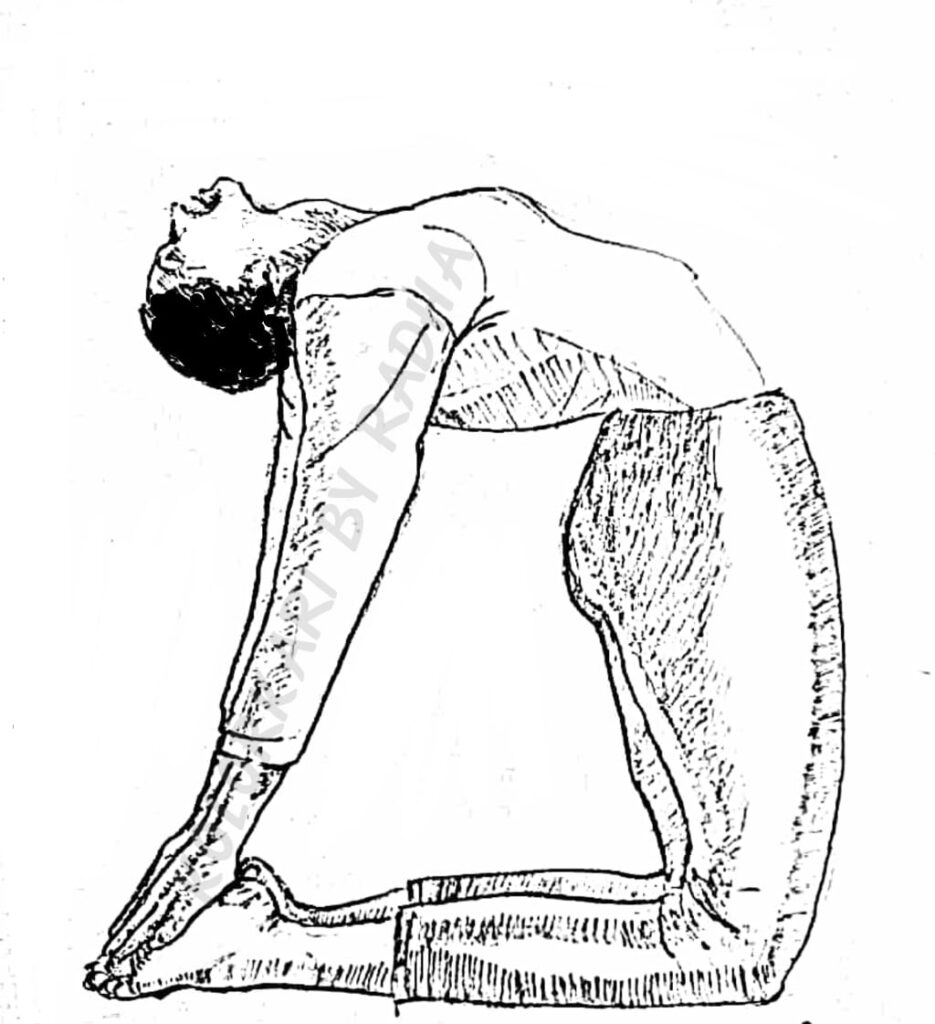
4. Ustrasana — Camel Pose
Best for: Hypothyroidism ✅ | Hyperthyroidism: Moderate — avoid deep neck extension
Ustrasana creates a deep stretch of the entire front of the body — particularly the throat and neck region where the thyroid gland is located. The strong extension of the neck and throat is believed in yoga practice to directly stimulate the thyroid and parathyroid glands through increased blood flow to the region. It also opens the chest, stimulates the adrenal glands, and has an energising effect on the entire endocrine system — particularly relevant for the fatigue and sluggishness of hypothyroidism.
Steps: Kneel on the floor with knees hip-width apart and thighs perpendicular to the floor. Place the hands on the lower back with fingers pointing downward. On an inhale, lift the chest upward and begin to arch back, pushing the hips forward over the knees. If flexible enough, reach back and place the hands on the heels. Allow the head to drop back only if there is no neck discomfort. Hold for 20 to 30 seconds with steady breathing. Exhale and come up slowly, leading with the chest. Immediately rest in Balasana (Child’s Pose) for several breaths.
Precautions: Keep the chin slightly tucked if you have neck problems — do not drop the head back fully. Avoid with severe lower back disc problems. People with hyperthyroidism should practise a gentler version without deep neck extension. Come out slowly to avoid dizziness.
5. Setu Bandhasana — Bridge Pose
Best for: Hypothyroidism ✅ | Hyperthyroidism: Safe with gentle practice ✅
Setu Bandhasana creates a gentle chin lock that directs blood flow to the thyroid and parathyroid glands while also opening the chest and strengthening the back and gluteal muscles. It is a more accessible alternative to Sarvangasana for beginners or those with neck sensitivity and provides many of the same circulatory benefits to the thyroid region with significantly less risk. It also stimulates the thyroid through gentle pressure from the chin to the sternum position held during the pose.
Steps: Lie on your back with knees bent and feet flat on the floor, hip-width apart, feet close enough to the hips to just touch the heels with fingertips. Arms alongside the body, palms down. On an inhale, press through both feet and lift the hips upward. Roll the shoulders under the body and optionally clasp the hands beneath the pelvis, pressing the arms down for lift. Tuck the chin into the chest — this creates the mild chin lock. Hold for 30 seconds to 1 minute. Exhale and lower the spine slowly to the floor vertebra by vertebra. Rest and repeat 3 times.
Precautions: Do not turn the head while in the pose. Avoid with neck injury. Those with lower back problems should keep the lift low.
6. Bhujangasana — Cobra Pose
Best for: Hypothyroidism ✅ | Hyperthyroidism: Gentle practice only
Bhujangasana stretches the front of the neck and throat, opens the chest, and improves blood circulation to the thyroid region through the backbend. It also strengthens the spinal muscles and adrenal glands and is one of the most frequently recommended yoga poses in Indian yoga traditions for overall endocrine health. For people with hypothyroidism experiencing fatigue, low mood, and poor posture — the energising, chest-opening quality of Cobra pose provides both physical and psychological benefit.
Steps: Lie face down with legs extended hip-width apart. Place palms flat beside the lower ribs, fingers forward. On an inhale, press through the palms and slowly lift the head, chest, and upper abdomen off the floor. Keep elbows slightly bent. Roll shoulders back and down — away from the ears. Look forward or slightly upward. Hold for 20 to 30 seconds with slow breaths. Exhale and lower back to the floor. Rest with forehead down. Repeat 3 to 5 times.
Precautions: Lift only as far as comfortable — do not force the backbend. Avoid with lower back disc problems or recent abdominal surgery.
7. Dhanurasana — Bow Pose
Best for: Hypothyroidism ✅ | Hyperthyroidism: Avoid
Dhanurasana is a stronger backbend that creates deep stimulation of the entire endocrine system — including the thyroid — through the strong stretch of the front of the body and the pressure on the abdominal region. It energises the adrenal glands, improves digestive function, and has a strongly activating effect on the metabolism — making it specifically relevant for the metabolic sluggishness of hypothyroidism. It requires moderate flexibility and should not be attempted by beginners without preparation.
Steps: Lie on your abdomen. Exhale, bend both knees and bring heels toward the hips. Reach back and grasp the outer ankles. On an inhale, lift the heels away from the hips and simultaneously lift the thighs and chest off the floor. Look forward. Hold 20 to 30 seconds with steady breaths. Exhale and release slowly. Rest with head on hands. Repeat up to 3 times.
Precautions: Avoid with lower back injury, high blood pressure, hernia, or recent abdominal surgery. Avoid during menstruation and pregnancy. Not suitable for beginners without prior yoga experience.
8. Ardha Matsyendrasana — Half Spinal Twist
Best for: Both hypothyroidism ✅ and hyperthyroidism ✅
Ardha Matsyendrasana massages the abdominal organs, improves liver and digestive function, and stimulates the kidneys and adrenal glands through the spinal rotation. For thyroid conditions where digestive sluggishness, constipation, and poor metabolic function are prominent — this twist provides a helpful internal massage of the organs involved in these processes. The rotation also improves thoracic spine mobility and chest expansion, supporting respiratory function.
Steps: Sit with legs extended. Bend the right knee — place the right foot flat outside the left thigh. Keep the left leg extended or bend it with the foot near the right hip. Inhale and lengthen the spine. Exhale and twist right — place the right hand on the floor behind you and the left elbow on the outside of the right knee. Turn the head to look over the right shoulder. Hold 30 seconds to 1 minute with slow breaths. Release on an inhale and repeat on the left side.
Precautions: Keep the twist gentle — never force. Avoid during menstruation and pregnancy. Those with spinal disc problems should consult their doctor.
9. Paschimottanasana — Seated Forward Bend
Best for: Both hypothyroidism ✅ and hyperthyroidism ✅ — particularly for stress and anxiety
Paschimottanasana calms the nervous system, reduces stress and anxiety, and activates the parasympathetic rest-and-digest response — directly countering the cortisol-driven stress that negatively affects thyroid hormone production and T4 to T3 conversion. For hyperthyroidism where anxiety, nervous restlessness, and insomnia are prominent, this calming forward bend is particularly beneficial. For hypothyroidism, it supports digestive function and relieves the constipation that commonly accompanies the condition.
Steps: Sit with legs extended straight. Flex the feet. Inhale and raise arms above the head, lengthening the spine. Exhale and hinge forward from the hips — not the waist — reaching toward the feet. Hold the shins, ankles, or feet wherever reachable without excessive rounding of the lower back. Hold 1 to 3 minutes with slow releasing breaths. Inhale to sit back up slowly.
Precautions: Never force the forward bend. Bend the knees generously if the hamstrings are tight. Avoid with severe lower back disc problems.
10. Viparita Karani — Legs Up the Wall
Best for: Both hypothyroidism ✅ and hyperthyroidism ✅ — gentle restorative inversion
Viparita Karani is a gentle semi-inversion that provides many of the circulatory benefits of full inversions with significantly less risk and effort. It reverses gravitational blood flow, calms the nervous system profoundly, reduces fatigue — a primary complaint in hypothyroidism — and improves venous circulation from the lower body. It is one of the most restorative and widely accessible yoga postures for people with thyroid conditions at any fitness level.
Steps: Place a folded blanket 5 to 8 cm from a wall. Sit sideways on the blanket with one hip close to the wall. As you lie back, swing both legs up the wall. Adjust until the lower back is comfortably supported on the blanket and the backs of the legs rest against the wall. Arms rest by the sides, palms up. Close the eyes. Breathe slowly and completely. Hold 5 to 15 minutes. To come out, bend the knees, slide the feet down the wall, roll to one side, and rest before sitting up.
Precautions: Avoid during heavy menstrual flow. Avoid with glaucoma or severe hypertension. Come out slowly to avoid dizziness.
11. Shavasana — Corpse Pose
Best for: Both hypothyroidism ✅ and hyperthyroidism ✅ — essential for every practice
Shavasana is the essential final relaxation of every yoga practice and is particularly important for thyroid conditions. Chronic stress elevates cortisol, which directly suppresses thyroid hormone production and impairs the conversion of T4 to active T3. Shavasana systematically reduces stress and cortisol through complete physical and mental relaxation — the most direct mechanism through which yoga supports thyroid health. A full 10 to 15 minute Shavasana should never be skipped when practising yoga for thyroid health.
Steps: Lie flat on your back in a clean, dust-free, comfortable environment at room temperature. Feet hip-width apart, arms slightly away from the body, palms facing upward. Close the eyes. Make any adjustments needed for complete comfort. Release all muscular effort. Breathe naturally without control. Systematically soften every part of the body from feet to scalp. Stay for 10 to 15 minutes. To come out, deepen the breath, move the fingers and toes, bend the knees, and roll to the right side before sitting up slowly.
12. Balasana — Child’s Pose
Best for: Both ✅ — use as a resting pose throughout practice
Balasana is the universal resting pose of yoga practice and is used between more demanding poses to allow the body to recover. For thyroid conditions, its deep calming effect on the nervous system, gentle compression of the abdomen, and stretching of the lower back make it a valuable transition and rest pose. It is particularly recommended between Ustrasana and subsequent poses, and whenever fatigue or breathlessness is felt during practice.
Steps: Kneel with big toes touching and knees either together or wide apart. Sit back toward the heels. Exhale and fold forward, lowering the torso between the thighs. Extend the arms forward with palms down or rest them alongside the body. Rest the forehead on the floor or on a blanket. Breathe slowly and deeply into the back of the body. Hold 1 to 5 minutes or as needed for rest.
🌬️ Pranayama for Thyroid — Breathing Techniques
⚠️ Important Note on Pranayama and Thyroid: Some pranayama techniques are specifically indicated for hypothyroidism while others are indicated for hyperthyroidism. The wrong pranayama can worsen the condition. Read carefully and follow the indications for your specific condition.
For Hypothyroidism — Stimulating Pranayama
Ujjayi Pranayama (Ocean Breath): The gentle constriction of the throat in Ujjayi breathing creates direct stimulation of the thyroid region through the vibration and pressure created in the throat passage. It is considered the most specifically indicated pranayama for thyroid conditions in classical yoga texts. Inhale slowly through the nose with gentle throat constriction creating a soft ocean sound. Exhale with the same constriction. Practise for 10 minutes daily.
Kapalabhati (Skull Shining Breath): Rapid forced exhalations stimulate the metabolic rate and energise the endocrine system — beneficial for the sluggish metabolism of hypothyroidism. Practise 30 to 60 strokes per round, 3 rounds. Do not practise during menstruation, pregnancy, or with high blood pressure.
Surya Bhedana (Right Nostril Breathing): Inhaling only through the right nostril is believed in traditional yoga practice to activate the sympathetic nervous system and stimulate metabolic activity — specifically indicated for hypothyroidism. Close the left nostril and inhale through the right. Close both, hold briefly. Exhale through the left. Practise 10 rounds.
For Hyperthyroidism — Calming Pranayama
Nadi Shodhana (Alternate Nostril Breathing): Balances the nervous system, reduces anxiety and sympathetic overactivation — all directly relevant for the anxious, restless presentation of hyperthyroidism. Without breath retention — alternate nostrils smoothly for 10 minutes daily.
Bhramari (Humming Bee Breath): Produces immediate calming of the nervous system through the vibration of the hum. Particularly valuable for the anxiety, palpitations, and irritability of hyperthyroidism. 5 to 10 rounds daily.
Sheetali (Cooling Breath): Inhaling through a rolled tongue cools the body and calms the nervous system — specifically indicated in classical yoga for hyperthyroid conditions where heat intolerance and excessive sweating are prominent. Roll the tongue into a tube, inhale through it, close the mouth and exhale through the nose. Practise 10 rounds.
🥗 Diet for Thyroid Health — Indian Context
🟢 Foods That Support Thyroid Health
- Iodine-rich foods: Iodised salt — the most important source of iodine in the Indian diet. Ensure all salt used at home and in cooking is iodised. Seafood and dairy also provide iodine.
- Selenium-rich foods: Brazil nuts (1 to 2 daily provide full selenium requirement), sunflower seeds, eggs, and mushrooms. Selenium is essential for T4 to T3 conversion and for protecting the thyroid from oxidative damage.
- Zinc-rich foods: Pumpkin seeds, chickpeas (chana), lentils, and whole grains. Zinc is required for thyroid hormone synthesis and TSH production.
- Antioxidant-rich vegetables: Spinach, tomatoes, bell peppers, and amla — reduce oxidative stress that damages the thyroid gland in autoimmune thyroid disease.
- Tyrosine-rich foods: Tyrosine is an amino acid required for thyroid hormone production — found in dal, paneer, eggs, and seeds.
🔴 Foods to Limit or Approach Carefully
- Raw cruciferous vegetables in large quantities: Cabbage, cauliflower, broccoli, and radish contain goitrogens — compounds that can interfere with thyroid hormone production when eaten raw in very large amounts. Cooking deactivates most goitrogenic activity. Moderate consumption of cooked cruciferous vegetables is safe for most people with thyroid conditions.
- Soy products: Large quantities of soy — particularly soy supplements or soy protein isolates — may interfere with thyroid hormone absorption. Moderate amounts of traditionally fermented soy products like tofu in normal cooking quantities are generally acceptable.
- Levothyroxine interactions: Calcium-rich foods, high-fibre foods, and coffee should not be consumed within 4 hours of taking levothyroxine — they impair medication absorption. Take levothyroxine on an empty stomach, 30 to 60 minutes before breakfast.
- Excess iodine in hyperthyroidism: People with hyperthyroidism should moderate iodine intake — excessive iodine can worsen an overactive thyroid. Discuss dietary iodine with your endocrinologist.
🌿 Lifestyle Changes for Thyroid Health
Consistent sleep schedule: Sleep deprivation disrupts the hypothalamic-pituitary-thyroid axis and worsens thyroid hormone regulation. Seven to nine hours of regular, good-quality sleep at consistent times is important for thyroid health. For hyperthyroidism where insomnia is common, Yoga Nidra and Bhramari pranayama before sleep are particularly helpful.
Regular physical activity: Beyond yoga, regular moderate aerobic activity — brisk walking 30 minutes five days per week — improves metabolic rate, insulin sensitivity, and mood. For hypothyroidism specifically, regular activity counteracts the metabolic slowdown. For hyperthyroidism, gentler activity is preferable until the condition is well-controlled medically.
Stress management: Chronic stress is a significant trigger for autoimmune thyroid conditions — both Hashimoto’s and Graves’ disease are autoimmune in origin. Stress management through yoga, pranayama, adequate social connection, leisure, and professional psychological support where needed is an important long-term management strategy.
Regular medical monitoring: TSH, T3, and T4 blood tests should be done at intervals recommended by your endocrinologist — typically every 6 to 12 months when stable on medication, or more frequently when dosage is being adjusted. Do not skip thyroid blood tests because symptoms feel better.
Medication compliance: Levothyroxine should be taken at the same time every day — ideally first thing in the morning on an empty stomach. Never miss doses, never self-adjust the dose, and always inform all doctors and dentists of your thyroid medication before any procedure or new prescription.
🚨 When to See a Doctor Immediately
Seek immediate medical attention for these symptoms:
- Rapid or irregular heartbeat — palpitations — that are new or worsening
- Severe chest pain or tightness
- Extreme fatigue and weakness — inability to carry out daily activities
- Significant and unexplained weight changes — gain or loss
- A lump or swelling in the neck — possible thyroid nodule or goitre
- Difficulty swallowing or breathing — possible goitre compression
- Bulging eyes — possible Graves’ disease ophthalmopathy
- Confusion, extreme drowsiness, low body temperature — possible myxoedema coma — medical emergency
- Fever, agitation, racing heart rate — possible thyroid storm — medical emergency
- Pregnancy with known or suspected thyroid disorder — requires immediate specialist review
🤰 Thyroid and Pregnancy — Special Consideration
Thyroid disorders during pregnancy require specialist management — thyroid hormones are critical for foetal brain development, particularly in the first trimester when the foetus depends entirely on maternal thyroid hormones. Hypothyroidism in pregnancy is associated with miscarriage, preterm birth, and impaired foetal neurological development if untreated. Hyperthyroidism in pregnancy carries risks of preeclampsia, low birth weight, and foetal thyroid dysfunction.
All women with known thyroid disorders should have thyroid function tested as soon as pregnancy is confirmed and should be managed jointly by their obstetrician and endocrinologist throughout pregnancy. Levothyroxine dose requirements typically increase during pregnancy — this is expected and normal. Yoga during pregnancy with thyroid conditions should only be practised under guidance from both the treating physician and a qualified prenatal yoga instructor.
❓ Frequently Asked Questions
Can yoga cure hypothyroidism or hyperthyroidism?
No. Thyroid disorders cannot be cured by yoga. Hypothyroidism typically requires lifelong levothyroxine replacement. Hyperthyroidism requires medical treatment. Yoga is a complementary practice that may improve quality of life, reduce symptoms, and support thyroid function alongside — not instead of — medical treatment. Some research suggests yoga may reduce levothyroxine dosage requirements over time, but this must always be managed by a doctor.
Which yoga pose is best for thyroid?
Sarvangasana (Shoulder Stand) is most frequently cited in classical yoga and modern research for thyroid health due to its direct stimulatory effect on the thyroid through chin lock and inverted circulation. However, it is contraindicated in several conditions. For those who cannot do Sarvangasana, Setu Bandhasana (Bridge Pose) and Matsyasana (Fish Pose) provide similar benefits more safely. The best approach is a complete practice including multiple poses — not a single posture.
Can I do yoga if I take levothyroxine?
Yes — yoga is safe and beneficial for people on levothyroxine. Take your medication as prescribed — ideally on an empty stomach in the morning — and practise yoga at any time that is convenient, ensuring at least 30 minutes have passed after medication. Yoga practice does not interfere with levothyroxine absorption. Inform your doctor that you are practising yoga so they can monitor thyroid levels and adjust medication if warranted over time.
How long before yoga shows benefit for thyroid?
Research studies showing measurable thyroid function improvements have used intervention periods of 3 to 6 months of regular practice — typically daily or 5 times per week. Symptomatic benefits including improved energy, reduced stress, and better sleep quality may be felt within weeks of consistent practice. Measurable changes in TSH and thyroid hormone levels require months of sustained practice. Consistency is essential — occasional practice will not produce meaningful results.
Is Sarvangasana safe for thyroid patients?
Sarvangasana is beneficial for hypothyroidism but must be avoided or practised with extreme caution in hyperthyroidism — as it actively stimulates thyroid hormone secretion. It is also contraindicated with neck injury, cervical spondylosis, high blood pressure, glaucoma, and during menstruation or pregnancy. Always learn inversions from a qualified teacher and get your doctor’s clearance before starting.
Can yoga help with thyroid-related weight gain?
Yoga can support weight management in hypothyroidism as part of a comprehensive approach — through improved metabolic function, stress reduction, better sleep, and regular physical activity. However, yoga alone is unlikely to significantly reverse the weight gain of undertreated hypothyroidism. The most important step is ensuring thyroid hormone levels are adequately replaced with proper levothyroxine dosing under medical supervision — weight gain often improves once thyroid levels are well-controlled.
What is the best time to practise yoga for thyroid?
Morning practice — after taking levothyroxine and allowing 30 to 60 minutes before breakfast — is ideal for most people with thyroid conditions. Morning is when cortisol is naturally higher, which provides energy for the more stimulating poses. Evening practice with a focus on restorative poses and pranayama is also beneficial — particularly for hyperthyroidism where calming the nervous system before sleep is a priority. Choose a consistent time and stick to it — regularity matters more than timing.
Should I avoid any yoga poses with hypothyroidism?
People with hypothyroidism should avoid Sheetali and Sitakari pranayama — these cooling practices reduce metabolic activity and are specifically indicated for hyperthyroidism, not hypothyroidism. In terms of asanas, there are no specific poses that must be avoided purely for hypothyroidism — but general yoga contraindications apply for any associated conditions such as obesity, joint problems, or cardiovascular issues. Build the practice gradually and always work within comfortable limits.
Also read: Yoga for PCOS Management | Yoga and Breathing for Asthma | Uttana Mandukasana — Steps and Benefits | Natural Management of High Blood Pressure | Ashwagandha Benefits in Ayurveda






I used certain crystals to cure my hypothyroidism. I think it will work with yoga moves too.
Can you please tell me which crystals did you use hun.
What type of crystals
body ka faltu Fat Kaise kam kiya ja sakta h
surely this will help anyone to get rid of thyroid problem.
hi what kind of crystels did u use can you suggest me?
organic virgin coconut oil works great with a vitamin tablet containing selenium and iodine. sea foods are great as well.
Are these yoga poses and diet good for hyperthyroidism too..Please reply soon
What precautions should we take while practicing yoga? Is there any asana/s which a thyroid patient should prevent doing ?
Yes it can remove from root , but if yoga will continu in proper way…
Why not grapes, banana, or mangos? Can you please post pictures of the poses too?
yoga method best treatment of thyroid problems. Even all defect rectify yoga
It’s best to take thyroid medication on an empty stomach because some foods (particularly those high in fiber) can interfere with absorption. Certain drugs and supplements can interact with thyroid medication as well, especially if you take them at the same time of day.
You didn’t mention Ujjayi Pranayama, which is very effective in Thyroid problem.
Thanks for the input
well lovely, article , best layout and filled with yoga teacher training Knowledge, i love to read this article.. and hope you will love to share Awesome articles like this, again and again with us..
This is Very Informative Article. Thanks for Sharing Great Information About Yoga Poses for Thyroid Problem. I Will Follow Your Yoga Tips.