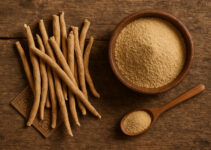

What Is Okra (Bhindi)?
Okra — known as bhindi in Hindi and lady’s finger in English — is a warm-season vegetable that has been cultivated for centuries across Africa, the Middle East, and South Asia. It is botanically classified as Abelmoschus esculentus and belongs to the Malvaceae family, making it a relative of hibiscus and cotton.
The edible part of the plant is the young, tender seed pod, which has a distinctive ridged texture and a mild, grassy flavor. When cooked, okra releases a natural mucilage — a gel-like substance that thickens soups and stews. This is the same property that makes it a traditional thickening agent in dishes like gumbo.
Despite its humble appearance, okra is nutritionally dense. It is low in calories, high in dietary fibre, and provides a range of vitamins and minerals that support digestive health, blood sugar regulation, and overall well-being.
Nutritional Profile of Okra (Per 100g)
The following values are based on data from the USDA FoodData Central (NDB No. 11278 – Okra, raw):
| Nutrient | Amount |
|---|---|
| Calories | 33 kcal |
| Protein | 1.93 g |
| Fat | 0.19 g |
| Carbohydrates | 7.45 g |
| Dietary Fibre | 3.2 g |
| Sugars | 1.48 g |
| Vitamin C | 23 mg |
| Vitamin K | 31.3 mcg |
| Folate | 60 mcg |
| Calcium | 82 mg |
| Magnesium | 57 mg |
| Potassium | 299 mg |
| Iron | 0.62 mg |
Source: USDA FoodData Central, NDB No. 11278 (Okra, raw). Values are for 100g of edible portion.
Note on Vitamin K: Some online sources incorrectly list vitamin K in milligrams (mg). The correct unit is micrograms (mcg). 100g of raw okra provides approximately 31.3 mcg of vitamin K — about 26% of the daily requirement for adults.
Does Okra Really Help With Blood Sugar?
This is the most researched and frequently asked question about okra. The short answer is: the evidence is promising, but the effect is modest and should not replace medical treatment.
What the Research Shows
A 2025 double-blind clinical trial published in ScienceDirect investigated the antidiabetic potential of okra in patients with Type 2 diabetes mellitus (T2DM). The study found that okra supplementation significantly improved insulin levels and HOMA-IR (a measure of insulin resistance)[reference:0].
A separate 2026 systematic review and meta-analysis published in PubMed examined the therapeutic potential of okra across the diabetes spectrum. The review found that okra supplementation led to significant reductions in 2-hour postprandial glucose (weighted mean difference = -22.39 mg/dL, 95% CI: -41.39 to -3.38)[reference:1].
Important Context
These findings are encouraging, but they come with important caveats:
- The studies used concentrated okra preparations (extracts, powders) — not the equivalent amount of cooked okra in a meal.
- The effects were modest — not dramatic blood sugar reductions.
- Okra is not a substitute for prescribed diabetes medication, dietary management, or medical monitoring.
Bottom line: Including okra in your diet is a reasonable, low-risk addition for most people with diabetes. But it should never replace medical treatment or prescribed medications.
7 Evidence-Based Health Benefits of Okra
1. May Support Digestive Health
Okra is a good source of dietary fibre (3.2 g per 100g), including both soluble and insoluble fibre. The soluble fibre — particularly the mucilage — absorbs water and forms a gel-like substance in the digestive tract. This can help soften stool, support regular bowel movements, and ease constipation.
The fibre in okra also acts as a prebiotic, feeding beneficial gut bacteria and supporting overall digestive health.
2. May Help Support Healthy Blood Sugar Levels
As discussed above, research suggests okra may have a modest blood sugar-lowering effect. This is likely due to its fibre content (which slows sugar absorption) and specific bioactive compounds found in the pods and seeds.
For people with prediabetes or Type 2 diabetes, including okra as part of a balanced, low-glycaemic diet may support overall glycaemic control — but only alongside medical treatment.
3. Rich in Antioxidants
Okra contains several antioxidants, including polyphenols, flavonoids, and vitamin C. These compounds help protect cells from oxidative stress caused by free radicals, which is associated with chronic conditions like heart disease, diabetes, and certain cancers[reference:2].
4. Supports Bone Health
Okra provides vitamin K (31.3 mcg per 100g) and calcium (82 mg per 100g), both of which are important for bone health. Vitamin K is involved in bone metabolism and helps reduce the risk of fractures. While okra alone is not a sufficient source of these nutrients, it contributes to a bone-healthy diet that includes dairy, leafy greens, and adequate sun exposure.
5. May Support Heart Health
The soluble fibre in okra can help lower LDL (bad) cholesterol by binding to bile acids and promoting their excretion. A 2018 study found that okra reduced LDL-cholesterol by 26.04 mg/dL and fasting blood sugar by 16.63 mg/dL in participants[reference:3]. Okra also contains potassium, which supports healthy blood pressure.
6. May Support Weight Management
Okra is very low in calories (33 kcal per 100g) and provides dietary fibre, which promotes satiety and reduces hunger cravings. It is a nutrient-dense food that can be included in a balanced weight-management diet. However, there is no strong clinical evidence that okra specifically causes weight loss — its role is as a low-calorie, high-fibre vegetable.
7. Supports Skin and Hair Health (Traditional Use)
Okra is traditionally used in Ayurvedic and folk medicine for skin and hair care. The mucilage is believed to have soothing and moisturising properties. Some sources suggest that okra gel — made by boiling and straining okra — can be applied topically to support hair softness and shine[reference:4].
Note: These are traditional uses. There is limited scientific evidence for topical okra applications. Always test on a small area before applying to the skin or hair.
How to Include Okra in Your Diet (Indian Context)
Okra is a versatile vegetable that can be prepared in many ways. Salting the sliced okra and letting it rest for 30 minutes before cooking reduces the sliminess.
- Bhindi Masala: Sautéed with onions, tomatoes, and spices including cumin, coriander, turmeric, and garam masala[reference:5].
- Bharwa Bhindi (Stuffed Okra): Slit and stuffed with a spiced mixture of roasted peanut powder and aromatic spices[reference:6].
- Kurkuri Bhindi (Crispy Okra): Thinly sliced, coated with gram flour and spices, and shallow-fried.
- Bhindi Sambar: Added to lentil-based sambar for a nutritious South Indian meal.
- Okra Water (Traditional Preparation): Some people drink okra water made by soaking sliced okra pods in water overnight. While this is a popular trend, there is limited scientific evidence that it offers benefits beyond regular okra consumption.
Critical Safety Warnings and Precautions
Okra is generally safe when consumed as a food in normal amounts. However, concentrated supplements and large doses can cause problems.
Drug Interactions
| Risk | Details |
|---|---|
| Metformin | Some studies suggest that okra may reduce the absorption of metformin, a common diabetes medication. One study found that okra extract reduced the antihyperglycemic activity of metformin when taken together. If you take metformin, do not consume concentrated okra supplements at the same time — separate them by at least 2 hours and consult your doctor.[reference:7] |
| Blood-thinning medications (Warfarin, Coumadin) | Okra is rich in vitamin K, which plays a role in blood clotting. If you take blood-thinning medications, a sudden increase in vitamin K intake can interfere with the medication’s effectiveness. Maintain a consistent intake rather than dramatically increasing okra consumption. |
Who Should Be Cautious
- People with kidney stones: Okra is on the high-oxalate food list. Oxalates can contribute to kidney stone formation in susceptible individuals. If you have a history of calcium oxalate kidney stones, limit okra intake and stay well hydrated.[reference:8]
- People with IBS or FODMAP sensitivity: Okra contains fructans, a type of carbohydrate that can cause gas, bloating, and cramping in sensitive individuals — particularly those with IBS[reference:9].
- People with diabetes on medication: Because okra may lower blood sugar, combining it with diabetes medication could theoretically cause hypoglycemia. Monitor your blood sugar and consult your doctor.
When to See a Doctor
Consult a doctor before consuming okra supplements or significantly increasing your intake if you:
- Have diabetes and take metformin, insulin, or other blood sugar-lowering medications
- Have kidney disease or a history of kidney stones
- Have irritable bowel syndrome (IBS) or other digestive conditions
- Take blood-thinning medications like warfarin
- Are pregnant or breastfeeding
Seek medical advice if you experience: persistent digestive discomfort, signs of hypoglycemia (dizziness, shakiness, confusion), or any unusual symptom after consuming okra or okra supplements.
Frequently Asked Questions About Okra (Bhindi)
Q: Does okra really lower blood sugar?
A: Research suggests okra may have a modest blood sugar-lowering effect. A 2025 clinical trial found improvements in insulin levels and insulin resistance in people with Type 2 diabetes. However, the effect is modest and okra should not replace prescribed diabetes treatment. Consult your doctor before using okra supplements.
Q: Can I drink okra water every day?
A: If you do not have diabetes, kidney disease, or IBS, small amounts of okra water daily are generally safe. However, there is limited scientific evidence that okra water offers benefits beyond eating whole okra. If you take metformin, do not drink okra water at the same time as your medication.
Q: Is okra good for weight loss?
A: Okra is low in calories and high in fibre, which can help promote satiety. It can be part of a weight-management diet, but it is not a standalone weight-loss remedy.
Q: Can okra cause kidney stones?
A: Okra contains oxalates, which can contribute to kidney stone formation in susceptible individuals. If you have a history of calcium oxalate kidney stones, limit okra intake and stay well hydrated.
Q: Is okra safe for diabetics on metformin?
A: Some research suggests that okra may interfere with metformin absorption. If you take metformin, do not consume concentrated okra supplements at the same time. Separate them by at least 2 hours and consult your doctor before making changes.
Q: Does cooking okra destroy its nutrients?
A: Cooking can reduce the vitamin C content of okra. To preserve nutrients, cook okra briefly — stir-frying or light steaming is better than prolonged boiling.