

Introduction
Co-curricular activities facilitate the development of various domains of mind and personality, such as intellectual, emotional, social, moral, and aesthetic. Creativity, enthusiasm, and positive thinking are some facets of personality development and the outcomes of extracurricular activities.
In my years of teaching yoga to children above the age of 8, I have consistently observed that physical activity does more than build fitness; it builds confidence, focus, and emotional resilience.
Meaning of Co-curricular Activities
Co-curricular activities (CCAs), earlier known as Extracurricular Activities (ECA), are the components of the non-academic curriculum that helps to develop various facets of the child’s and student’s personality development. For the child’s all-round development, there is a need for emotional, physical, spiritual, and moral development that is complemented and supplemented by Co-curricular Activities.
The meaning of co-curricular activities revolves around their different features and characteristics. For the overall development of a child, the curriculum is not the only single criterion. For holistic growth and to develop children’s various facets of personality, classroom teaching should be supplemented with extracurricular activities. These activities help to affect students’ cognitive, emotional, social, moral, cultural, aesthetic, and job opportunities.
Co-curricular activities focus more on cognitive aspects, helping intellectual development: competitiveness, excellence, quality achievements, creativeness, and enthusiasm.
Definition of Co-curricular Activities
Co-curricular Activities are defined as the activities that enable to supplement and complement the curricular or main syllabi activities. These are essential for educational institutions to develop the student’s personality and strengthen classroom learning.
These activities are organised after school hours, known as extra-curricular activities. Co-curricular Activities have a broad horizon to cater to the child’s cultural, social, and aesthetic development.
The extracurricular activities of leading modern educational thinkers and others are:
“Co-curricular activities were mainly organised after school hours, and so were the extra-curricular activities, but they are not an integral part of the school’s activities as its curricular work” — according to Aggarwal (2000).
“Various social and other activities like literary, dramatic, social services, etc., which attracted the child’s attention, were considered extracurricular activities. Extracurricular activities have been renamed by educationists as co-curricular, which implies that all these activities are a part of the school curriculum.” — according to Mittal (1999).
Historical Background of Co-curricular Activities
Co-curricular activities are familiar to the modern curricular education syllabi. It can be traced to ancient Indian schools, gurukuls, and religious places. All the Indian scriptures like the Mahabharata, Ramayana, Ved, Upanishad, etc., mention extra-curricular activities. In ancient times, simple co-curricular activities in school were organised, such as wrestling, cooking, singing, playing, magic, etc. In the rest of the world, co-curricular programs were standard in ancient civilisations.
In Spartan Civilization (Greece), warfare, heroic activities, archery, creativity, and artistic talents were widespread. In Roman Civilization, concrete arts & crafts and religious ceremonies were given importance. In Europe’s dark history, extra-curricular activities were also part and parcel of life. During the reformation period, such activities got patronage.
Great educational thinkers such as Rousseau, Herbert Spencer, and Dewey gave much more importance to co-curricular activity in school education. According to them, Co-curricular activities play a vital role in student life.
Difference Between Curricular and Co-curricular Activities
- Curricular is formal, while co-curricular activities are informal.
- Curricula involves classroom teaching, instructional education, examination, and evaluation, while co-curricular activities encompass singing, dancing, gardening, mass drill, community work, games, etc.
- Curricula comprise reading books, going through newspapers and journals, and extra-curricular activities known for telling stories, acting, doing theatrical work, singing, etc.
- In curricular education, students spend their time in the laboratory, workshop, or doing essential assignments for class work. But in the case of extra-curricular activities, students perform work such as cleaning roads & school, gardening, painting, creative art and so on.
- In the curricular mode of education, students formally read about different festivals, ceremonies and celebrations, while in co-curricular activities, the children actively participate physically in these functions.
- However, the vital difference between curricular and co-curricular activities is that the latter helps to supplement and complement the curricular teaching.
Examples and Types of Co-curricular Activities
- Sports
- Musical activities
- Debate
- Model
- Art
- Music
- Drama
- Debate and discussion
- Declamation contest
- Story writing competition
- Essay writing competition
- Art craft
- Recitation competition
- Wall magazine decoration
- Writes ups for school magazine
- Folk songs
- Folk dance
- Flower show
- School decoration
- Sculpture making
- Fancy dress competition
- Preparation of chart & models
- Album making
- Photography
- Clay modeling
- Toymaking
- Soap making
- Basket making
- Organization exhibitions
- Celebration of festival
The Role of Co-curricular Activities in a Student’s Life
Co-curricular activities are the authentic and practical experiences received by students. They help students make careers in Economics, Commerce, Mathematics, Accountancy, Nutrition, etc. To a greater extent, theoretical knowledge gets strengthened when a relevant co-curricular activity related to the content taught in the classroom is organised. The Classroom solely accomplishes intellectual aspects of personality, while aesthetic development, character building, spiritual growth, physical growth, moral values, creativity, etc., are supported by co-curricular activities. It helps to develop coordination, adjustment, speech fluency, extempore expressions, etc., among students at the school and college levels.
To realise the all-round development of students, curricula should be amalgamated with co-curricular or extra-curricular activities. Co-curricular activities help in the realisation of the aims and objectives of education. In practical life, the student’s ability to express their ideas freely due to active participation in debate and extempore. The discussion also helps in generating beliefs and inculcating values. Sometimes, classroom teaching becomes monotonous and routine. Here, co-curricular activities can bring pleasant and joyous experiences. Thus, co-curricular activity has many advantages in student’s life in school, college, and university.
How Co-curricular Activities Support Your Child’s Health
Co-curricular activities are not just about building a resume; they are a fundamental pillar of your child’s overall health and well-being. The benefits extend far beyond the classroom.
1. Physical Health
Physical activities like sports, athletics, and yoga improve cardiovascular health, build strong muscles and bones, and help maintain a healthy weight. They also enhance motor skills, coordination, and balance. Over the years, I have noticed that children engaged in structured co-curricular activities tend to sleep better and display improved overall vitality. It helps in the proper channelisation of physical health.
2. Mental Health
Activities like debate, drama, and music provide an essential outlet for expression and creativity. They help children manage stress, reduce anxiety, and build self-esteem. Since 2006, my work with children has shown me that those who practice yoga regularly often handle academic stress with greater resilience. It is a good source of remaining fit and healthy and provides mental rest.
3. Emotional and Social Health
Participation in group activities like team sports, drama, or music ensembles teaches children cooperation, empathy, and conflict resolution. It provides avenues for socialisation, self-identification, and self-assessment. I have spoken with numerous parents who share the same observation: the right activity can transform a child’s emotional outlook.
Yoga as a Co-curricular Activity: Benefits for Children
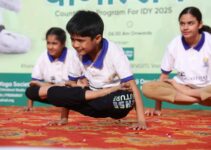
Yoga is a unique co-curricular activity that integrates physical postures (asanas), breathing techniques (pranayama), and mindfulness. It is particularly beneficial for children aged 8 and above, as it helps them navigate the physical and emotional changes of growing up.
Benefits of Yoga for Children
- Improves flexibility, strength, and balance.
- Enhances concentration and memory.
- Reduces symptoms of stress and anxiety.
- Promotes better sleep and digestion.
Safety Precautions
- Yoga should be practiced on an empty stomach or at least 2-3 hours after a meal.
- Children should wear comfortable, breathable clothing.
- Poses should be modified based on the child’s age and physical ability.
- Always work with a qualified yoga instructor who has experience teaching children.
When to See a Doctor
- If the child has asthma, consult their paediatrician before starting breathing exercises.
- If the child has any physical injury or chronic condition, ensure clearance from a doctor.
Importance and Benefits of Co-curricular Activities
Co-curricular activities stimulate playing, acting, singing, recitation, speaking, and narrating in students. Activities like participation in game debates, music, drama, etc., help achieve the overall functioning of education. It enables the students to express themselves freely through debates. Games and Sports help the child be fit and energetic. It helps to develop the spirit of healthy competition. These activities guide students on how to organise and present an activity, develop skills, and co-operate and coordinate in different situations — all these help in leadership qualities. It provides avenues of socialisation, self-identification, and self-assessment when the child comes in contact with organisers, fellow participants, teachers, and people outside the school during cultural activity. Inculcate the values to respect other’s views and feelings. It makes you perfect in decision-making. It develops a sense of belongingness. CCA motivates learning. CCA develop values like physical, psychological, Ethical, academic, civic, social, aesthetic, cultural, recreational, and disciplinary values.
Students inter-mingle with different peer groups during these activities, which satisfy the needs of socialisation, self-assessment, and self-identification. Extra-curricular activities require sacrifice and control, which ultimately helps groom your balanced personality. Field trips, travelling, and tours help to know about other places, people, customs, and cultures. These activities provide opportunities to adjust themselves to other people. It helps in the proper channelisation of physical health. Extra-curricular activities motivate learning.
Co-curricular Activities for Kids
The seeds of personality development start blooming at this age. So, experiencing extra-curricular activities at this point is very important for the individual. As many psychological and sociological changes take place during this period, therefore proper care should be taken both by parents as well as teachers.
Co-curricular activities are critical for children who are full of energy and need a productive outlet. Physical activities and creative pursuits help channel that energy into something constructive. If your child has a diagnosed condition such as ADHD, consult their paediatrician or a child psychologist to find appropriate activities that support their specific needs.
Role of a Teacher in Organising Co-curricular Activities
The teacher must be a good planner so that the different activities can be carried out systematically throughout the year. It should be the teacher’s duty to give the child more opportunities while performing co-curricular activities. The Teacher should act as an Innovator by introducing innovative programs. The teacher must be a good organiser so that the students experience a maximum of it. He should act like a director, recorder, evaluator, manager, decision-maker, advisor, motivator, communicator, and coordinator so that the student and child can gain a maximum of finer aspects of Co-curricular activities.
The teacher can also be a leader, innovator, director, organiser, manager, recorder, advisor, motivator, communicator, or coordinator. While executing such activities, the teacher faces lots of difficulties. However, after consultation with seniors and the school administrator, he should be encouraged to complete the assignment.
Co-curricular Activities at Different Education Levels
Primary School Level
It is the primary level where the importance of co-curricular activities must be addressed. All the education thinkers had given prominent space to CCA in this stage. The different co-curricular activities examples are: Recitation, Simple story writing, Play, Parade, Music, Dancing, Drawing, Painting, Fancy dress, Folk Dance, Assembly, Reading.
Secondary School Level
Several parents are worried about the participation of their candidates in co-curricular activities. They raised the question of the importance of co-curricular activities in school. Here, the role of the event motivator has become pivotal, pursuing the parents regarding the benefits of co-curricular activities. In high school, a large number of co-curricular activities are organised. Examples include: Debate and discussion, School magazine, Dramatics, Study circle, Clubs, Societies, Art groups, Seminar, Kavi Summelan, Library work, Sports and Games, Indoor and outdoor athletics, Mass drill, Parade, Scouting, Music, Dancing, Drawing, Painting, Sculpture, Exhibition, Fancy dress, Folk Dance, Folk Songs, Cooperative Bank, Cooperative Store, Assembly, Students’ Council, Celebration of Religious, National and Social Festivals, Organizing of School Panchayat Mock Parliament, Social Study Circle, Fair, Professions, Cultural Programmes, Guiding, First Aid, Red Cross, Social Survey, Stamp Collection, Coin Collection, Collection of Copies, Photography, Reading, Needlework, Knitting, Picnic, Visit to Museum, Zoo etc.
College and University Level
Co-curricular activity is an integral part of college and university students. CCA develops social interaction and healthy recreation in the atmosphere of formal education. In many colleges and universities, thrust is given to leadership development through designing some specific co-curricular activities. The importance of CCA in colleges has increased in recent times. Some examples include: Debate and discussion, Workshops, Seminar, Conference, Social-interaction, Dramatics, Study circle, Clubs, Societies, Art groups, Library work, Sports and Games, Indoor and outdoor athletics, Mass drill, Parade, Scouting, National Cadet Corps (NCC), National Sports Organisation (NSO), National Service Scheme (NSS), ACC, Music, Dancing, Dramatics, Exhibition, Cultural Programmes, Guiding, Red Cross, Social Survey, Stamp Collection.
List of Outdoor Co-curricular Activities
- Mass parade
- Mass drill
- Yoga
- Athletics
- Bicycling
- Gardening
- Cricket
- Football
- Basketball
- Volleyball
- Kabaddi
- Kho kho
- Handball
- Trips to the place of geographical, historical, economic, or cultural interest
- Mass prayer
- Morning assembly
- Excursions
- Social service in the neighbourhood
- Village Survey
List of Indoor Co-curricular Activities
- Dramatics
- Music and dance
- Drawing and painting
- Decoration
- Weaving
- Clay modeling
- First Aid
- Tailoring
- Rangoli
- Bookbinding
- Cardboard work
- Leatherwork
- Organizing school panchayat
- Student self-government
- Art and craft
Choosing Activities Based on Your Child’s Needs
Parents frequently ask me which activities best suit their child. My response is always rooted in the child’s unique temperament, age, and physical capacity.
- For energetic children: Team sports like football or basketball provide a healthy outlet for their energy.
- For introverted children: Activities like art, music, or yoga offer a safe space for self-expression.
- For children struggling with focus: Yoga and martial arts can help improve concentration and discipline.
- For children with physical limitations: Consult a paediatrician to find adapted activities that are safe and enjoyable.
I always advise parents to consult a paediatrician before introducing any rigorous physical activity, particularly if the child has pre-existing health conditions.
Precautions and Safe Use
While co-curricular activities are generally safe and beneficial, parents and teachers should keep the following in mind:
- Warm-up and cool-down: Ensure children warm up before intense activity and cool down afterwards to prevent injury.
- Hydration: Encourage children to drink water before, during, and after activities.
- Proper gear: Use appropriate footwear, clothing, and safety equipment for the chosen activity.
- Supervision: Children should always be supervised by qualified adults or instructors.
- Listen to the body: Teach children to stop if they feel pain, dizziness, or shortness of breath.
- Medical conditions: If your child has asthma, a heart condition, or any chronic illness, consult their doctor before starting any new activity.
Frequently Asked Questions (FAQs)
Q: At what age can children start yoga?
A: Children can start simple yoga poses as early as age 5–6, but the complexity should match their age and physical development. For children 8 and above, more structured practices can be introduced.
Q: Can co-curricular activities help with my child’s anxiety?
A: Physical activity and creative pursuits can support emotional wellbeing, but they are not a treatment for anxiety disorders. If your child has persistent anxiety, consult a child psychologist or paediatrician.
Q: How many activities should my child participate in?
A: Quality matters more than quantity. One or two activities that the child genuinely enjoys are better than five activities that cause stress or exhaustion.
Q: Is yoga safe for children with asthma?
A: Some yoga breathing exercises may help, but children with asthma should follow their prescribed treatment plan and consult their doctor before starting any new practice.
Q: What if my child is not interested in sports?
A: Not all children enjoy competitive sports. Creative activities like music, art, or drama offer similar health benefits — social connection, emotional expression, and physical movement (in the case of dance or theatre).
Q: Are co-curricular activities good for children with ADHD?
A: Physical activity and structured creative pursuits can help channel energy productively. However, they are not a treatment for ADHD. Consult your child’s paediatrician or a child psychologist to find activities that support their specific needs.





Ultimate Gyaan,,that I was looking for 🙂 Good article.
In article definition is given as –
“These activities are organized after the school hours, so known as extra-curricular activities.”
Most of the schools in their class time table include subjects like physical education, art, work experience.
Could we consider these subjects as Co curricular subjects?
yes all these activities are conducted after classes or in free period
Yes
Yaa! According to me we cannot say Co-curricular activity are organised after the school hours … Because nowadays every schools are conducting different activities as their subjects . They consider an important part of their curriculum. Therefore we can define Co-curricular activities “All those extra activities which are other than academic education and helps in the overall development of a child”.
When is this article published? Thanks!
Role of a Teacher in Organising curricular Activities
1.The teacher must be a good planner so that the different activities could be carried out systematically throughout the year.
2.It should be the duty of the teacher to give more and more opportunity to the child while performing co-curricular activities.
3.The Teacher should act as Innovator by introducing some innovative programmes.
4.The teacher must be a good organiser so that the students experienced maximum of it.
5.He should too act like as director, recorder, evaluator, manager, decision maker, advisor, motivator, communicator, coordinator, so that the student and child could gained maximum of finer aspects of Co-curricular activities
Its quite useful.Thank you for your valuable information that solved by dilemma.
Students enjoy it; parents like it; schools promote it, however not all activities are equal or balanced in relation to a teacher’s workload. Many activities take place on a weekend where teaching staff are required to work some of or all of a Saturday. Travelling time varies but could be 2 – 3 or more hours. Consider travelling from Sydney to Orange. I would like to read a discussion surrounding the potential impact this form of activity could have/does have on the families of teachers.
AJF
i have gathered so much information from here thank you so much
itx really helful for me thnx 🙂
It is good and clear article
Its a great help! Thanks! 🙂
Thanks! It helps a lot;
Thanks for the information,it has really helped with my research
I want to know more about cca
good info and very helping material
really very helpful piece of information.thanku so much 4 expaining in detail
thanks you for the explanation now im on limelight about importance and benefits of co-curricula activities to students
As being a CCA Director in a renowned school, it has been a very useful article for me and has benefited for the students and the school itself.
Thank you very much.
Thank so much . I was in search of such information very badly. Thks a lot
Thanks
As a student of curriculum development, this artical has been of tremendous value to me.
This helped alot thanks guys
Really a clarifying article.
Thank u very much for helping me in writing home assignment
thank u very much i was needing this information badly to implement in school where i work as a cca in charge.
Sir it it is nice. I also follow cca curricular activities in our school jai Bharati public school grastanganj
Teacher is a good friends for students teacher can you help me I am very disturbed my assignment in education topics curricular and co curricular activities so please help me my assignment in education book for difference between curricular and co curricular activities
Hello! Can I know who’s the writer of this article? I’m going to include some of its part on our philosophical study. Waiting for your immediate reply. Thanks a lot.
Awesome article which I was searching for my debate………really helpful
Its really wholesome…!!keep up the good work…
You have done a good job of not only explaining the concept but have also considered the difficulties of modern day students and parents. i am writing from Malaysia. Here parents are chasing after an A Grade in every subject including Art and Craft. This results in students spending most of their time mugging for exam leaving aside physical and other sports and social activities
A good insight into why modern day youth are loosing their social and interpersonal relations skills
Good work….. Though there should a difference between venues/avenues of co-curricular activities and the activities themselves
Very informative
Made my assignment 🙂
Educating and information given,now I can plan for my students as a teacher.Thank you.
Is Pageant (Mr. and Ms. Elementary School for example) also included in the co-curricular acrivities?
YES
THANKS A LOT HAVE LEARNED MORE.AM GREAT FULL
It is the best I wanted to seek tips for my oral examination and this helped me a lot tq very much
Thanks for appreciation
Should a school use these co curricular activities as a discipline tool? Such as: If you are signed more then 2 times you can not participate in Field Day & 4 times means a student can not attend their end of year party.
thank you for clear information
Really it cleared the concepts of curricular and co curricular activities, it is very useful article
Thanks for the clarity in the article.
Who is the writer of the article please
Hi,
You may contact the author through the Email: info@gyanunlimited.com
thanks
Excellent beat ! how can i subscribe for a weblog site? The account aided me a applicable deal.
I were a little bit acquainted of this your broadcast offered shiny clear concept
In article definition is given as –
“These activities are organized after the school hours, so known as extra-curricular activities.”
Most of the schools in their class time table include subjects like physical education, art, work experience.
Could we consider these subjects as Co curricular subjects?
Of course.
That is one of the definitions. There are so many definitions have been suggested by various authentic books.
Sir, u have rightly well explained.
Can I use this article for my project work…or should I add a little bit more???
Nice blog,
Thanks for sharing this valuable blog about extracurricular activities. Keep blogging!!!
its most helpful for all student to think about what is co-curricular activities and on the other hand teachers,how to perform these activity for some ways
i am a big fan of co-curricular activities. Thank you love from japan
It is amazing and I had to explain about this topic and you totally reliefed me out
super very helpfull
An outstanding effort has been made. Surely it will benefit the students, teachers, institutions and nation as a whole. Thanks a lot for this remarkable effort. All the best
Thank you so much as I needed this info so much to prepare for my test where notes was not given and explanation was difficult to understand
What are the co curricular activities in teaching of mathematics??
Please share content of co-curricular activities in school management…..
nice, exhaustive writing on co-curricular activities.
I have a question and i really don’t know how i solve it please help me to solve it….
And question is
How do different games assist in the sound development of an individual of an individual?
Effective information. Gained basic knowledge on the importance of co curricular activities.
Very nice meaning and defination
I was searching for a good site that could help me gather information about this topic. This seriously helped me a lot. Thanks
Nice tips and I gratitude for sharing with us. keep it up! Good information for any candidate. I am impressed after read this article.
Super and helpfull
Super essay . Big thanks for the author .
But, please include the conclusion . thank you very much.
It’s good and useful .
Giving good information
Super awesome.you have really helped me,thankyou
Thank you
Thank for giving more knowledge
Thanks a lot….almost fulfilled my question…
who is the author of this? when was it published?
Tanvi
I found Co-curricular Activities: Meaning, Definition, Examples, Importance,
Benefits very educational.
This article is really good and I’m planning to use this in our research paper. Where can I find the full citation info? Author(s), date published etc
thanks………….
Could you please explain giving examples 3 procedures that a teacher could follow through co-curricular activities???
Informative and understandable
thank you so much easy and simple way topic give us ……again thanks
Wonderful article! We are linking to this particularly great article on our website.
Keep up the good writing.
useful article.. thank you..
may i know who is the author of this one and which date this article posted.
Can i note this my assignments presentation
Okay by giving the reference of the website.
Superb
Nicely done and written my friend.
Continue the excellent work!
Cheers,
Darb
salute u for exhaustive information.
Thank you so much! This greatly helps me in preparing my report in my Masters Degree.
perfect
Nice article I must say but The definition of co-curricular seems to be suggesing that of extracurricular. Co curricular activities is supposed to complement curricular activities which is carried out within school hours while extra curricular activities are done outside the school hours and are not related to curricular .But they benefit the students individually even though it is not related to the curriculum.
You wrote this article very well. Very knowledgeable. Thanks for sharing this article